
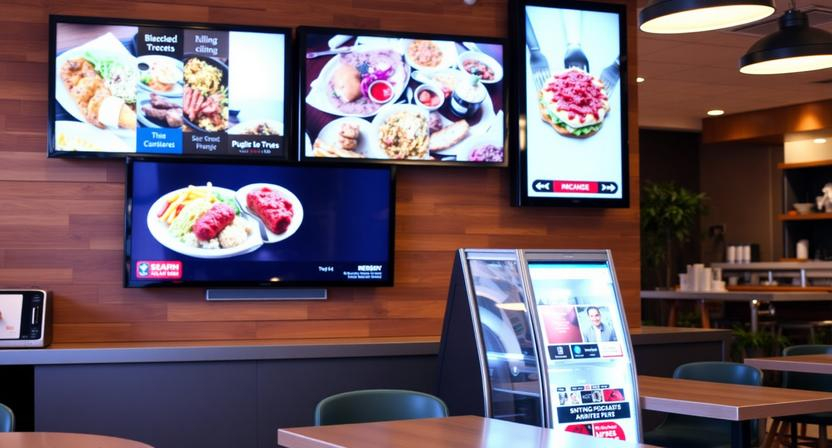
Digital signage solutions can be defined as the full ecosystem of hardware, software, and network infrastructure used to display dynamic content on screens. Unlike static posters, digital signage lets organizations update messages in real time across one or multiple locations. These solutions are now common in retail, corporate offices, restaurants, hospitals, airports, and schools.
An average digital signage setup includes display screens (LCD, LED, or 4K), media players, mounting equipment, and—most importantly—digital signage software. The software acts as the control center, allowing users to design, schedule, and deliver content remotely. This is what turns a basic screen into a practical communication tool that can inform, engage, or influence audiences.
Digital signage software is important
The key to any signage network is the software, often called a content management system (CMS) for screens. Hardware without a strong CMS becomes an expensive monitor that never changes. Modern digital signage software is typically cloud-based, meaning you can control screens from any internet-connected device. This replaces USB updates and on-site computers. Common features include drag-and-drop design, scheduling, remote device monitoring, and real-time updates. Advanced platforms may also support data integration, interactive touch, and audience analytics.
Important characteristics to look for
When comparing digital signage solutions, these features usually matter most:
-
Centralized content management: Manage dozens or hundreds of screens from one dashboard. Changes can push out in seconds, improving consistency and reducing manual effort.
-
Scheduling and playlist management: Plan content days or months ahead. A restaurant could show breakfast menus in the morning and automatically switch to lunch specials at noon. Seasonal campaigns can also be set to repeat yearly.
-
Real-time data integration: Pull live content like weather, social feeds, news headlines, inventory levels, or transport schedules. This makes signage more useful than simple advertising.
-
Remote monitoring: See screen/player health and get alerts if a display goes offline. Some platforms also support remote rebooting and diagnostics to reduce downtime.
Advantages across industries
Digital signage creates practical benefits across many environments. Retail can increase sales with promotions and guided navigation. Corporate offices can share KPIs, announcements, and wayfinding. Restaurants can improve order accuracy and upsell through visuals. Healthcare can reduce perceived wait times with education and entertainment. Schools can share campus updates, emergency alerts, and event schedules.
Scalability and future trends
One advantage of cloud software is scalability. A small cafe can start with one display and expand later without replacing the entire system. Enterprise platforms can support thousands of displays with localized content while still enforcing brand standards. Future development includes AI, facial recognition (where permitted), and predictive analytics to make content more relevant by time of day or viewer demographics.

 Arabic
 French
 Spanish
 Portuguese
 Deutsch
 Turkish
 Dutch
Dutch
 Italiano
 Russian
 Romaian
 Portuguese (Brazil)
 Greek
Greek