

Modern surgery depends on details that many people never see. Among them is a small but vital component: the screw drive interface. In orthopedic fixation systems, surgical instrument assemblies, and precision long medical tweezers hardware, the design of a screw head can affect control, efficiency, and safety in the operating room. One drive type that continues to earn attention for its balance of simplicity and performance is the cruciform screw. Though it may seem like a minor engineering feature, the cruciform design plays an important role in how force is applied, how securely components are seated, and how reliably surgeons and technicians can work under pressure. In both orthopedic and general surgery settings, precision matters at every step. A screw that accepts torque smoothly and maintains alignment can support better workflow, improve handling, and reduce the risk of slippage during critical procedures.
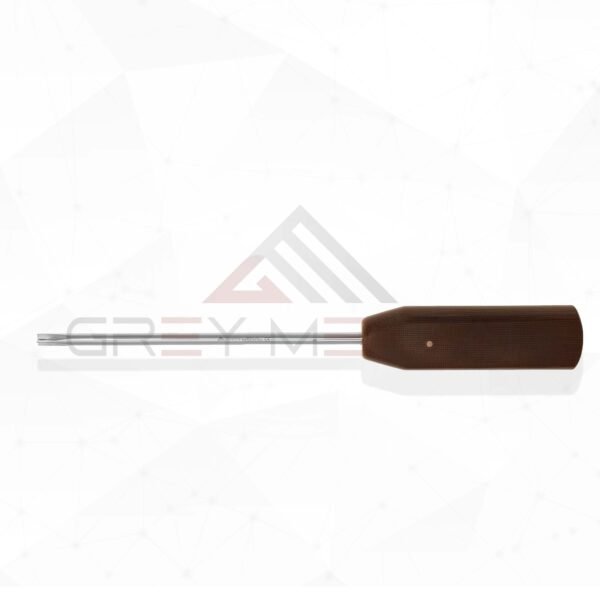
What Is a Cruciform Screw?
A cruciform screw features a cross-shaped recess in the head, designed to engage with a matching driver. The term “cruciform” refers to this cross geometry, which enables the driver tip to seat within the screw head at multiple contact points.
In medical applications, cruciform screws are used in several contexts, including:
- Orthopedic implants and fixation systems
- Surgical instrument assembly
- Modular instrument components
- Device housings and precision medical equipment
- Internal fastening systems in reusable and single-use tools
The key value of the cruciform screw format lies in controlled torque transfer. When the driver fits correctly, the recess helps distribute force more evenly than simpler drive patterns, supporting stable engagement during insertion and removal.
The Evolution of Screw Drive Systems in Surgery
The history of surgical hardware follows the broader history of engineering: as procedures became more advanced, instruments had to become more precise. Early fastening systems often relied on simpler slot-based designs. While functional, slotted screws were harder to align quickly and more prone to driver slip. In a surgical environment, that limitation is significant.
As instrument makers and implant manufacturers sought better solutions, cross-recessed drive types gained favor. Cruciform designs improved driver centering and made it easier to apply rotational force in tight or delicate settings. This was especially valuable as orthopedic surgery evolved toward more complex internal fixation methods, where secure screw placement and precise torque control became essential.
The rise of minimally invasive techniques also increased the need for dependable screw engagement. Surgeons often work through smaller access points with less room for error. In these situations, a screw drive that helps maintain alignment and reduces slippage can offer a meaningful practical advantage.
Today, cruciform screws remain relevant because they sit at the intersection of usability, manufacturing efficiency, and performance.
Why the Cruciform Design Works
The strength of the cruciform screw comes from its geometry. The right angle forceps cross-shaped recess creates a self-centering effect when the driver is inserted. This helps the tip seat more naturally and reduces the need for repeated repositioning.
From an engineering standpoint, the design offers several operational benefits:
- Better engagement between driver and screw head
- More consistent torque transmission
- Improved axial alignment
- Lower risk of lateral slip during turning
- Easier handling in constrained surgical fields
These properties are not just mechanical advantages. In surgery, they also support speed, confidence, and repeatability.
Torque Transmission: A Major Advantage in Surgical Use
Torque transmission is one of the most important performance factors in any screw system. In surgery, inadequate torque transfer can lead to poor seating, stripped heads, or difficulty during removal. The cruciform recess improves this process by creating multiple areas of contact between the driver and the screw.
This allows force to be delivered with greater control than in a basic slotted design. For surgeons and instrument technicians, that means:
- Smoother insertion
- More predictable tightening
- Better control during assembly and disassembly
- Less wasted motion during procedures
In orthopedic surgery, where screw fixation may influence compression, alignment, and construct stability, controlled torque matters. Even when the cruciform screw is part of the instrument system rather than the implant itself, its performance can affect workflow and reliability in the operating room.
Reduced Cam-Out and Why It Matters
Cam-out occurs when the driver slips out of the screw recess under torque. This is more than a minor inconvenience. In surgical settings, cam-out can damage the screw head, mark nearby surfaces, interrupt the procedure, and reduce confidence in the fastening system.
One reason cruciform screws are valued is their ability to reduce unintended slippage when compared to older or less supportive drive types. Their recessed geometry helps keep the driver engaged, especially when used with correctly matched, high-quality surgical drivers.
Reduced cam-out offers several practical benefits:
- Lower risk of screw head damage
- Fewer interruptions during tightening or removal
- Less chance of instrument wear caused by repeated slip
- Better protection of nearby tissue or device surfaces
- Improved efficiency in fast-paced operating environments
While no screw design is immune to misuse, the cruciform format supports more secure engagement when proper technique and compatible tools are used.
Improved Axial Alignment for Better Control
Axial alignment refers to how well the driver stays centered along the screw’s axis during use. In surgery, this is critical. Poor alignment can lead to off-angle insertion, uneven force distribution, or instability during placement.
The cruciform drive helps the user maintain central engagement more easily than flat-slot designs. This is especially useful in:
- Deep surgical access sites
- Limited-visibility procedures
- Instrument repair and reassembly
- Applications requiring careful, repeatable fastening
Better axial alignment can improve tactile feedback as well. Surgeons and technicians often rely on feel as much as sight, especially when working with delicate assemblies. A screw system that tracks more cleanly along its axis can contribute to better procedural confidence.
Cruciform Screws in Orthopedic Surgery
Orthopedic surgery places some of the highest demands on hardware performance. Screws are central to fixation systems used in trauma care, reconstructive procedures, spinal surgery, and implant instrumentation. While many implant screws use specialized proprietary drives, cruciform screws still play a valuable role in associated surgical tools, support hardware, and certain fixation applications.
In orthopedic settings, cruciform screws are often appreciated for:
- Reliable seating during repeated use
- Good compatibility with established driver systems
- Efficient assembly of modular surgical instruments
- Stable fastening in trays, guides, handles, and accessory components
Because orthopedic procedures often involve repeated sterilization cycles and heavy instrument handling, durability matters. A well-manufactured cruciform recess can retain usability across multiple cycles when made from appropriate surgical-grade materials and maintained correctly.
Use in General Surgery and Medical Devices
Beyond orthopedics, cruciform screws are common in general surgical instruments and medical device construction. They may be found in:
- Retractors
- Forceps assemblies
- Endoscopic support components
- Electrosurgical device housings
- Instrument handles and articulated mechanisms
Their value in these applications is straightforward: they allow dependable fastening in compact spaces and support consistent maintenance. Biomedical engineers, sterile processing teams, and service technicians benefit from drive systems that are easy to engage, inspect, and service.
In devices that require periodic calibration, cleaning, or repair, the cruciform screw offers a practical balance between accessibility and performance.
Comparing Cruciform Screws to Other Drive Types
No screw drive is perfect for every application. In surgical hardware, the right choice depends on required torque, sterilization demands, driver availability, material properties, and regulatory design goals. Still, the cruciform screw compares favorably in several important ways.
Versus Slotted Screws
Slotted screws are simple and inexpensive, but they are harder to center and easier to slip. In medical use, that can slow work and increase the risk of damage. Cruciform screws generally provide:
- Faster driver engagement
- Better centering
- Lower slip risk
- More consistent torque application
Versus Hex Drives
Hex drives can offer strong torque performance, especially in specialized systems. However, they may require more precise driver seating and can be affected by debris or wear in recessed spaces. Cruciform screws often provide easier initial engagement and strong usability in routine medical hardware applications.
Versus Torx and Other Advanced Drives
Torx and similar drive types often deliver excellent torque transfer and low cam-out. In some premium surgical systems, these advanced drives are preferred. Even so, cruciform screws remain widely used because they are familiar, cost-effective, and well-suited to many medical assembly needs.
Their advantage is not always maximum torque capacity. Rather, it is dependable everyday performance in a broad range of surgical and device-related uses.
Material and Manufacturing Considerations
The performance of a cruciform screw depends on more than head geometry. Material quality, machining precision, and surface finish all affect how the screw behaves in surgical environments.
Medical-grade cruciform screws are often produced from corrosion-resistant materials such as stainless steel or titanium alloys, depending on the application. Important design and manufacturing factors include:
- Tight dimensional tolerances
- Recess depth consistency
- Surface hardness
- Corrosion resistance
- Biocompatibility where required
- Resistance to repeated sterilization exposure
Poorly formed recesses can undermine all the benefits of the cruciform design. If tolerances are loose or the driver fit is imperfect, torque transfer suffers and wear increases. For this reason, high-quality manufacturing is essential in medical hardware.
Best Practices for Surgical Performance
Even a well-designed screw performs best when matched with the right technique and maintenance standards. In clinical and technical settings, good handling practices help preserve function and reduce avoidable issues.
Key best practices include:
- Use the exact matching driver size and profile
- Inspect screw heads and driver tips for wear before use
- Maintain straight axial alignment during engagement
- Avoid excessive force during insertion or removal
- Replace worn drivers to reduce slippage risk
- Follow sterilization and maintenance protocols consistently
These steps support better torque control and extend the service life of both screws and instruments.
The Role of Cruciform Screws in Workflow Efficiency
Surgical efficiency is not only about speed. It is about smooth, predictable performance across every instrument and component in the procedural chain. A fastening system that works reliably reduces friction in the broader workflow.
Cruciform screws contribute to this in several ways:
- Quick visual recognition
- Familiar handling for trained staff
- Reliable engagement during setup and maintenance
- Reduced need for repeated driver repositioning
- Lower likelihood of minor delays caused by slippage
In high-volume surgical environments, these small improvements can add up. When instruments are easier to assemble, inspect, and service, teams can maintain readiness with fewer disruptions.
Future Trends in Surgical Hardware
Surgical hardware continues to evolve as procedures become more precise, less invasive, and more data-driven. In the future, screw drive systems will likely be shaped by several trends:
1. Greater specialization
Manufacturers are developing application-specific fastening solutions tailored to implant systems, robotic platforms, and advanced surgical tools.
2. Improved material science
New alloys and coatings may improve wear resistance, corrosion control, and long-term performance under repeated sterilization.
3. Enhanced driver-screw interfaces
Even familiar designs like the cruciform may be refined for better fit, reduced wear, and more precise torque response.
4. Integration with smart instrumentation
As powered and torque-limited tools become more common, screw interfaces will need to support tighter control and better repeatability.
5. Design for serviceability
Medical devices are increasingly being engineered for easier maintenance, inspection, and component replacement. Reliable, accessible drive systems will remain important in that shift.
While highly specialized drive types may expand in premium systems, the cruciform screw is likely to remain relevant where balance, familiarity, and dependable mechanical performance are needed.
Conclusion
The cruciform screw may be small, but its impact on surgical hardware is significant. In orthopedic and general surgery applications, it supports a level of precision and reliability that aligns well with the demands of modern medicine. Its cross-recessed design improves torque transmission, supports axial alignment, and helps reduce cam-out compared to simpler legacy drive types.
For surgeons, technicians, engineers, and instrument specialists, these are not minor details. They shape how securely components fit, how efficiently tools are handled, and how confidently procedures can move forward.
As surgical technology advances, the need for dependable fastening solutions will only grow. The cruciform screw remains an important part of that story: practical, proven, and well-suited to the precision-driven future of medical hardware.

 Arabic
 French
 Spanish
 Portuguese
 Deutsch
 Turkish
 Dutch
Dutch
 Italiano
 Russian
 Romaian
 Portuguese (Brazil)
 Greek
Greek