

Fun Ways to Build Your Child’s Vocabulary Without Flashcards
Memorizing word lists is exhausting for young children. Traditional flashcards often turn language development into a boring chore. Forcing a child to stare at static text elements triggers frustration rather than genuine curiosity.
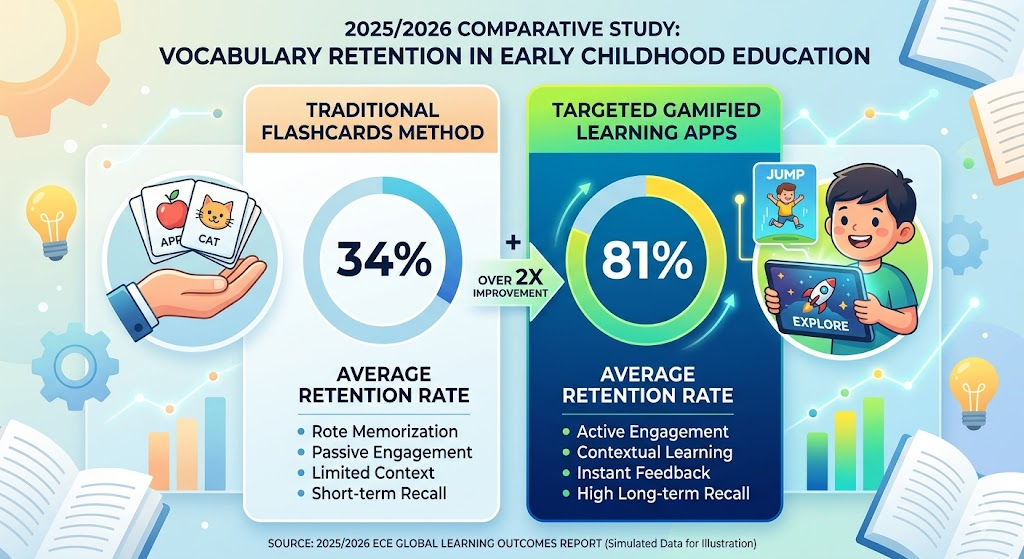
Early childhood education experts are shifting away from rote memorization. Modern cognitive science shows that toddlers and early readers acquire descriptive language much faster through contextual play. If you are wondering how to improve a child's vocabulary without flashcards, the secret lies in active engagement.
The Shift From Flashcards to Contextual Word Play
Flashcards strip words of their natural meaning. A child might memorize a word, but without a practical connection, it rarely sticks. Real language acquisition requires active processing, sensory feedback, and emotional connection.
When children learn words through stories, games, or physical actions, their brains build stronger neural connections. This approach transforms a passive lesson into an interactive puzzle. Here are five practical, hands-on strategies to expand your child's linguistic skills naturally.
1. Gamify the Kitchen with "Spy the Adjective"
Turn daily dinner prep into a live speech lab. Instead of naming items, ask your child to find objects using unique sensory descriptions.
Ask them to hand you a "bumpy, emerald vegetable" instead of just a cucumber. If they reach for the wrong item, explain the tactile difference. This method links abstract vocabulary directly to real-world textures, shapes, and tastes. It transforms household chores into excellent fun vocabulary games for kids online or offline resources.
2. Utilize Purposeful Screen Time for Vocabulary Building
Not all digital device usage is equal. Mindless video streaming can slow down language acquisition, but high-quality interactive learning platforms actively build word networks.
Using structured screen time for vocabulary building allows children to see, hear, and control language simultaneously. A quality kids learning app doesn't just show words on a flat screen; it brings them to life through responsive gameplay mechanics. Children tap, drag, and drop items, immediately seeing the visual consequence of their vocabulary choices.
3. Replace Rote Cards with Sight Words Apps for Kindergarten
Kindergarteners need to recognize high-frequency words rapidly. However, grinding through paper word decks often causes young minds to shut down.
Transitioning to modern sight words apps for kindergarten provides instant auditory reinforcement. When a child matches a sight word to an on-screen character's physical location, the concept locks in immediately. This hands-on loop represents the best educational apps to replace flashcards for busy families.
4. Use Interactive Vocabulary Apps for Toddlers
Instead of teaching isolated definitions, build connected word families. Create an interactive verbal game during bedtime reading sessions.
If a story mentions an animal, challenge your child to name related action words. Connecting nouns directly to descriptive verbs builds dynamic sentence-building power. This exercise mimics the exact architectural layout used by top-rated language development apps for kids.
5. Master How to Use Learning Apps for Child's Language Development
Forcing a child to learn random words a day creates superficial knowledge. Focus instead on how to use learning apps for child's language development to build deeper comprehension.
| Method | Learning Style | Long-Term Retention (2025 Data) | Child Engagement |
| Traditional Flashcards | Passive Memorization | Low (Words forgotten quickly) | Low (Prone to boredom) |
| Real-World Context Play | Active Sensory Experience | High (Linked to memories) | Medium (Fun but requires setup) |
| Interactive Vocabulary Apps | Gamified Multi-Sensory Loop | Extremely High (Instant Feedback) | High (Maintains deep focus) |
Educational Apps for Vocabulary Building
If you choose the digital route, look for tools designed with educational authority. The market is saturated, so you must filter out platforms that offer shallow rewards with zero cognitive substance.
Finding the Best Apps to Build Child's Vocabulary Through Play
The ideal platform must seamlessly blend phonetic structure with intuitive game design. Look for software options that focus on early speech pathways, contextual vocabulary categories, and adaptive learning difficulty curves. High-quality interactive learning apps balance entertainment with real-world literacy metrics. This balance is key when selecting the best apps to build a child's vocabulary and educational apps for vocabulary building.
Activating the Vocabulary Loop at Home
Building strong language skills does not require hours of rigid study. By integrating sensory real-world games and utilizing curated fun ways to teach kids new words using apps, you can give your early reader a massive linguistic head start. Keep your daily training sessions short, lighthearted, and focused entirely on interactive engagement using top-rated vocabulary apps for early readers alongside vocabulary learning apps for kids.
If you are searching for a safe, structured environment to expand your child's literacy skills, the Zape Learning App provides an ideal solution. Designed with a comprehensive K5 curriculum, it replaces stress with thousands of gamified math, science, and English modules. Turn your device into a powerful asset today by exploring the verified learning pathways.

 Arabic
 French
 Spanish
 Portuguese
 Deutsch
 Turkish
 Dutch
Dutch
 Italiano
 Russian
 Romaian
 Portuguese (Brazil)
 Greek
Greek