
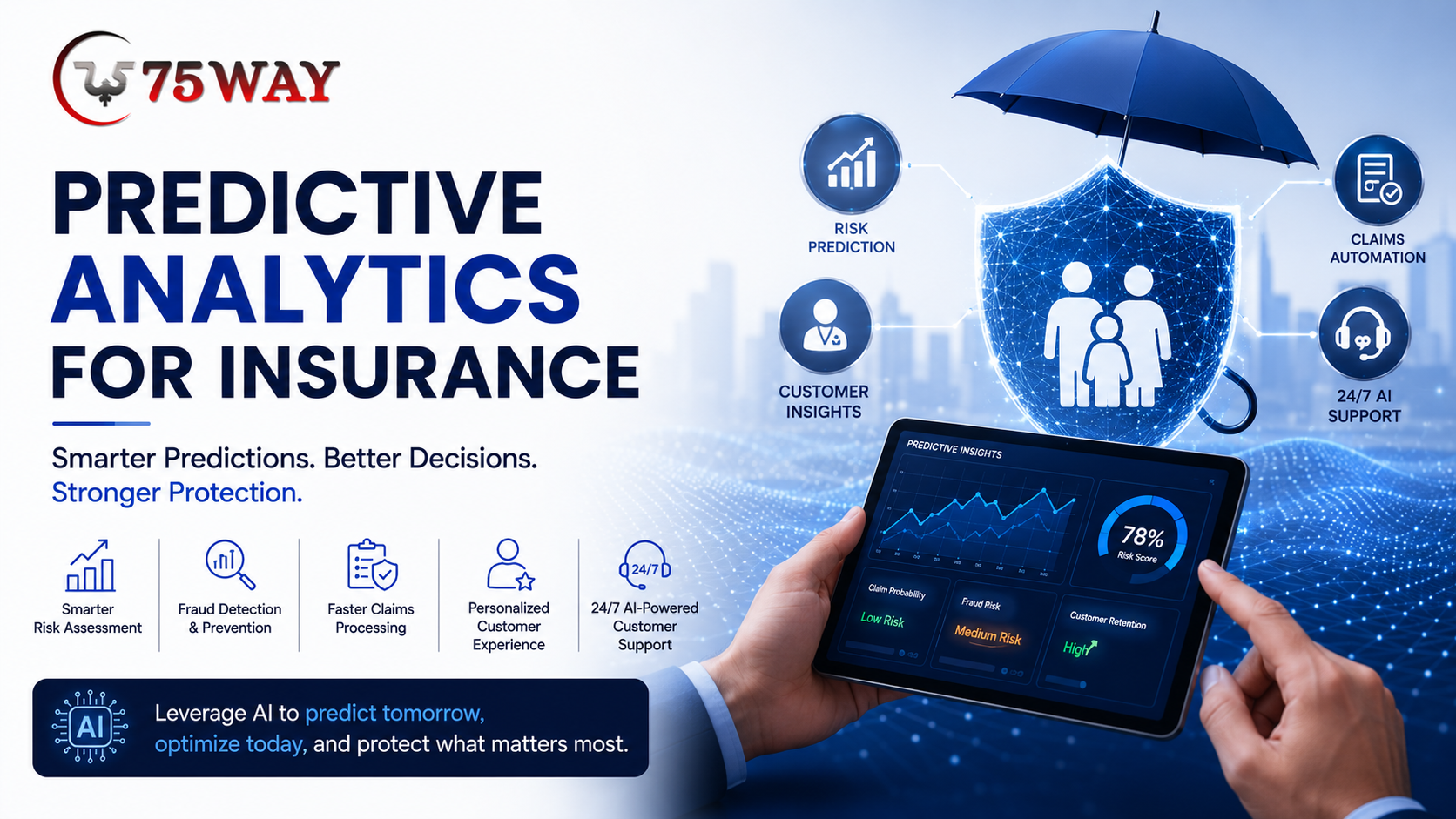
The insurance industry is experiencing a significant digital transformation driven by advancements in artificial intelligence. Insurers today face growing challenges, including increasing customer expectations, evolving risks, fraud prevention concerns, and the need for faster claim processing. To remain competitive in this rapidly changing landscape, companies are turning to intelligent technologies that can deliver greater efficiency and accuracy.
Among the most impactful innovations, predictive analytics for insurance has emerged as a powerful tool for helping insurers make smarter decisions. By leveraging machine learning, big data, and advanced algorithms, insurance providers can anticipate risks, improve underwriting processes, enhance customer experiences, and streamline operations.
As organizations continue investing in modern AI for insurance, predictive technologies are becoming essential for driving growth, reducing costs, and delivering personalized services. This article explores how predictive analytics works, its benefits, key applications, and the future of AI-powered insurance operations.
Understanding Predictive Analytics in Insurance
Predictive analytics involves using historical and real-time data to forecast future outcomes. In the insurance sector, these technologies analyze vast amounts of information to identify patterns, assess risks, and support data-driven decision-making.
Traditional insurance models often rely on historical averages and manual assessments. While effective to some extent, these methods can be limited when dealing with complex risk scenarios and rapidly changing market conditions.
Modern AI-powered systems can process data from multiple sources, including:
- Customer demographics
- Policy histories
- Claims records
- Behavioral data
- Financial information
- Telematics devices
- Social and environmental factors
- Healthcare records (where permitted)
By identifying hidden patterns within these datasets, predictive models provide insurers with actionable insights that improve operational performance.
Why Insurance Companies Are Embracing Artificial Intelligence
The insurance industry generates enormous volumes of data every day. Managing and analyzing this information manually is increasingly difficult and inefficient.
Artificial intelligence enables insurers to transform raw data into valuable intelligence that supports strategic decision-making.
Advanced AI insurance solutions help organizations:
- Improve risk assessment accuracy
- Detect fraudulent activities
- Automate repetitive processes
- Personalize customer interactions
- Accelerate claims processing
- Optimize pricing strategies
These capabilities allow insurers to operate more efficiently while delivering better experiences for policyholders.
How Predictive Analytics Works
The effectiveness of predictive technologies depends on sophisticated machine learning models and advanced statistical techniques.
Data Collection
The process begins with gathering large datasets from internal and external sources. High-quality data forms the foundation of accurate predictions.
Data Processing
Collected information is cleaned, organized, and prepared for analysis. This step ensures consistency and improves model reliability.
Machine Learning Model Training
Algorithms are trained using historical insurance data to recognize patterns associated with claims, risks, fraud, and customer behaviors.
Pattern Recognition
The system identifies relationships between variables and uncovers trends that may not be apparent through traditional analysis methods.
Risk Forecasting
Once trained, the model predicts future outcomes such as claim probability, policyholder behavior, and potential fraud risks.
Continuous Optimization
As new data becomes available, predictive models continuously improve their accuracy and effectiveness.
This dynamic learning process enables insurers to adapt quickly to changing market conditions.
Key Benefits of Predictive Analytics for Insurance
Improved Risk Assessment
One of the most valuable applications of predictive analytics for insurance is enhanced risk evaluation.
AI-powered models analyze numerous variables simultaneously, helping insurers assess applicants more accurately and price policies appropriately.
Better Underwriting Decisions
Traditional underwriting often involves manual reviews and subjective judgments.
Predictive technologies support underwriters by providing data-driven insights that improve decision-making and reduce inconsistencies.
Fraud Detection and Prevention
Insurance fraud costs companies billions of dollars annually.
Machine learning systems can identify suspicious patterns, detect anomalies, and flag potentially fraudulent claims for further investigation.
Faster Claims Processing
Customers increasingly expect quick and seamless claim resolutions.
Automated analytics help insurers verify information, assess claims, and accelerate approvals while maintaining accuracy.
Enhanced Customer Retention
Understanding customer behavior is critical for maintaining long-term relationships.
Predictive models identify policyholders who may be at risk of leaving, enabling insurers to take proactive retention measures.
Increased Operational Efficiency
Automation reduces administrative workloads and allows employees to focus on higher-value activities.
This improves productivity while lowering operational costs.
Transforming Customer Experience Through AI
Modern consumers expect personalized, convenient, and responsive services from their insurance providers.
Artificial intelligence enables insurers to deliver customer-centric experiences across multiple touchpoints.
Personalized Policy Recommendations
Machine learning analyzes customer profiles and suggests insurance products that best meet individual needs.
Intelligent Communication
AI-powered systems provide relevant information, reminders, and policy updates based on customer preferences.
Faster Response Times
Automation enables insurers to respond quickly to inquiries, claims, and service requests.
Omnichannel Engagement
Customers can interact seamlessly across websites, mobile applications, chat platforms, and customer service channels.
These capabilities contribute to stronger customer satisfaction and loyalty.
AI Solutions for 24/7 Customer Service in Insurance
Customer support is a critical aspect of insurance operations. Policyholders often require assistance outside traditional business hours, especially during emergencies.
This is where AI solutions for 24/7 customer service in insurance provide significant value.
AI-Powered Chatbots
Virtual assistants can answer common questions, provide policy information, and guide customers through claims processes at any time.
Automated Claims Assistance
Intelligent systems help customers submit claims, upload documentation, and track claim status without waiting for human intervention.
Voice-Based Support
Conversational AI enables natural language interactions through voice assistants and automated call systems.
Instant Policy Access
Customers can retrieve policy details, payment information, and coverage summaries whenever needed.
These solutions enhance customer convenience while reducing support costs for insurers.
Applications Across Different Insurance Segments
Artificial intelligence is transforming multiple areas of the insurance industry.
Health Insurance
Predictive models help assess health risks, identify preventive care opportunities, and optimize claims management.
Auto Insurance
Telematics data enables insurers to analyze driving behavior and develop usage-based insurance programs.
Life Insurance
AI assists with underwriting decisions by evaluating risk factors more efficiently and accurately.
Property Insurance
Predictive systems assess environmental risks, weather-related threats, and property vulnerabilities.
Commercial Insurance
Businesses benefit from advanced risk modeling that supports more accurate coverage and pricing decisions.
Each segment gains unique advantages from intelligent analytics and automation technologies.
Challenges and Considerations
While the benefits are substantial, implementing advanced analytics solutions requires careful planning.
Data Privacy and Security
Insurance providers handle highly sensitive customer information.
Strong security measures and regulatory compliance are essential for maintaining trust and protecting data.
Data Quality
Predictive models depend on accurate and comprehensive datasets.
Poor-quality data can negatively impact model performance and decision-making.
Regulatory Compliance
Insurance companies must ensure AI implementations align with industry regulations and ethical standards.
Model Transparency
Organizations should strive for explainable AI systems that provide transparency into how decisions are generated.
Workforce Adaptation
Successful AI adoption requires employee training and change management strategies.
Addressing these challenges helps maximize the value of intelligent insurance technologies.
Future Trends in Insurance Analytics
The future of insurance will be increasingly shaped by artificial intelligence and predictive technologies.
Hyper-Personalized Insurance Products
Insurers will develop highly customized policies based on individual risk profiles and behavioral insights.
Real-Time Risk Monitoring
Connected devices and IoT technologies will enable continuous risk assessment and proactive intervention.
Advanced Fraud Prevention
Future systems will leverage deeper behavioral analysis and real-time monitoring to identify fraudulent activities more effectively.
Autonomous Claims Management
Many routine claims processes will become increasingly automated, reducing processing times and operational costs.
Predictive Customer Engagement
Insurers will anticipate customer needs and provide proactive recommendations before issues arise.
These innovations will continue transforming how insurance companies operate and serve customers.
Why Insurance Providers Need the Right AI Partner
Implementing predictive analytics successfully requires specialized expertise in artificial intelligence, machine learning, data science, and insurance operations.
Organizations should seek technology partners that offer:
- Insurance industry knowledge
- Proven AI development experience
- Scalable solutions
- Strong security practices
- Regulatory compliance expertise
- Long-term support and optimization
The right partner can help insurers navigate digital transformation while maximizing business outcomes.
How 75way Technologies Supports Insurance Innovation
As insurance companies accelerate their digital transformation efforts, reliable technology partners play a crucial role in successful implementation.
75way Technologies develops advanced AI-driven solutions that help insurers optimize operations, improve customer experiences, and enhance decision-making capabilities.
From predictive risk assessment platforms and fraud detection systems to intelligent customer service solutions and automated claims processing, the company delivers customized technologies designed to meet the evolving needs of modern insurance organizations.
By leveraging innovative AI frameworks and data-driven strategies, insurers can unlock new opportunities for growth and operational excellence.
Conclusion
Artificial intelligence is reshaping the insurance industry by enabling smarter decision-making, greater efficiency, and improved customer experiences. At the center of this transformation is predictive analytics for insurance, which empowers organizations to forecast risks, optimize operations, and deliver more personalized services.
As competition increases and customer expectations continue evolving, investing in advanced AI solutions for insurance companies has become a strategic necessity. Organizations that embrace intelligent technologies today will be better positioned to improve profitability, strengthen customer relationships, and maintain a competitive advantage in the years ahead.
The future of insurance belongs to companies that leverage data intelligently, automate effectively, and continuously innovate through AI-powered transformation.
Frequently Asked Questions (FAQs)
1. What is predictive analytics for insurance?
Predictive analytics for insurance uses artificial intelligence, machine learning, and historical data to forecast risks, claims, customer behavior, and other future outcomes that support better decision-making.
2. How does AI improve insurance underwriting?
AI analyzes large datasets to assess risk more accurately, helping underwriters make faster and more informed policy decisions.
3. Can artificial intelligence detect insurance fraud?
Yes. Machine learning algorithms identify suspicious patterns, anomalies, and unusual claim activities that may indicate fraudulent behavior.
4. What are AI solutions for 24/7 customer service in insurance?
These include chatbots, virtual assistants, automated claims support, and conversational AI systems that provide customer assistance around the clock.
5. How does AI benefit insurance customers?
Customers receive faster claims processing, personalized policy recommendations, improved support experiences, and more accurate pricing.

 Arabic
 French
 Spanish
 Portuguese
 Deutsch
 Turkish
 Dutch
Dutch
 Italiano
 Russian
 Romaian
 Portuguese (Brazil)
 Greek
Greek