
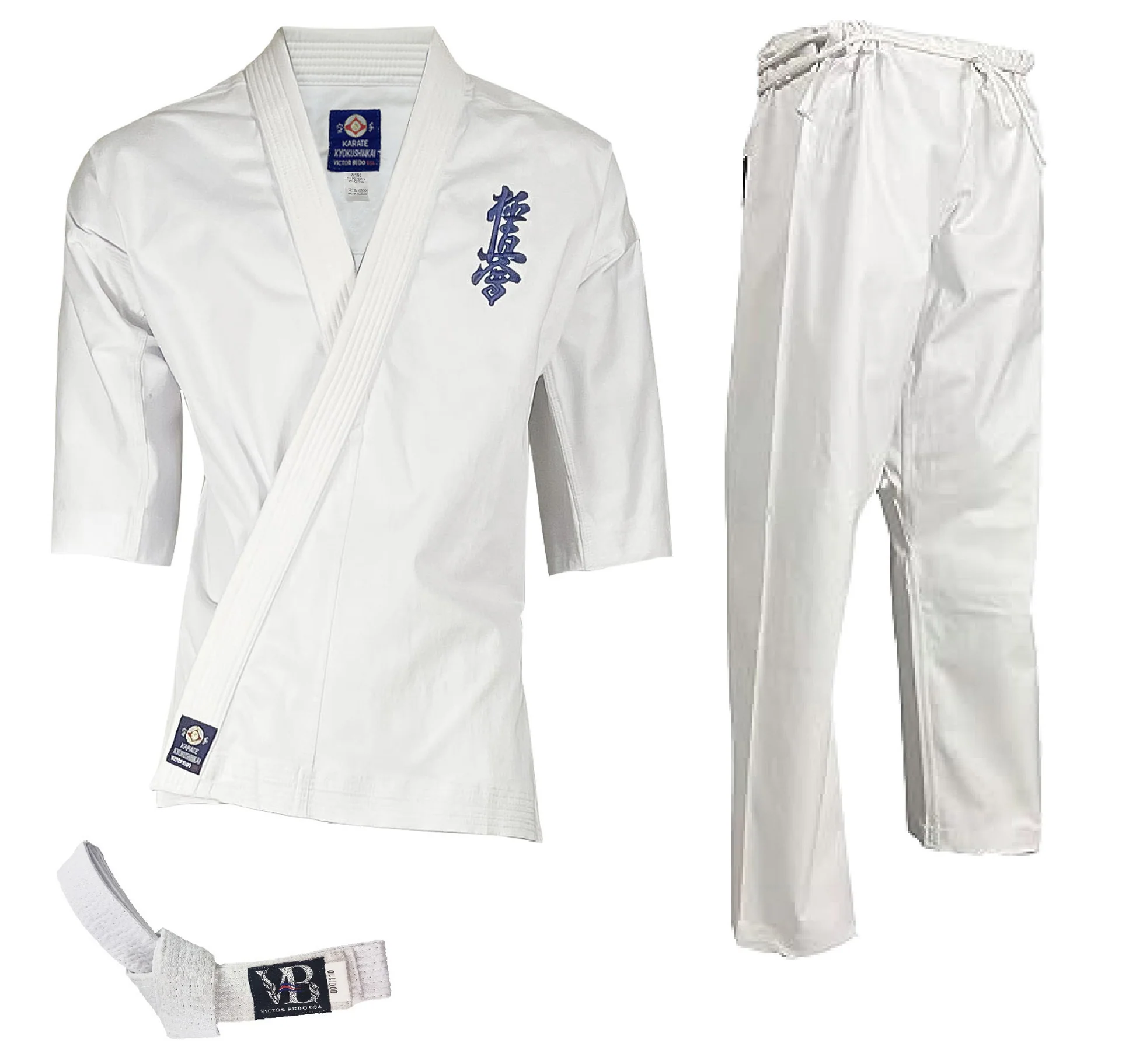
One of the first pieces of equipment beginners should consider is a proper martial arts uniform. Depending on your discipline, this could be a karate gi, judo gi, taekwondo dobok, BJJ gi, Kung Fu uniform, or another specialized training outfit. A good uniform should provide enough freedom of movement for kicking, punching, grappling, stretching, and other techniques. It should also be durable enough to withstand repeated washing and demanding training sessions. Beginners should check their academy's uniform requirements before purchasing because some schools have specific rules regarding color, fabric, design, and fit. Avoid uniforms that are excessively loose or restrictive, as either can interfere with technique. A properly fitted uniform helps you move naturally while maintaining a professional training appearance. Choosing durable martial arts clothing from the beginning can also reduce the need for frequent replacements as your training schedule becomes more consistent.
2. Martial Arts Belts
Belts are an important part of many traditional martial arts systems. Although belt colors and ranking systems differ between disciplines and schools, a belt generally represents progress, knowledge, experience, and dedication. Beginners normally receive their starting belt from their instructor or academy. It is important to understand that a belt is not simply an accessory; it can represent the effort required to develop technical and personal skills. When purchasing a replacement or training belt, beginners should choose an appropriate length and durable construction. Cotton belts are commonly used because they provide a traditional appearance and can withstand regular training. Some practitioners prefer embroidered belts for a more personalized or professional appearance. Beginners should always follow their instructor's guidelines when selecting a belt, particularly if the academy has specific requirements for color, width, material, or style.
3. Hand Wraps for Hand and Wrist Support
Hand wraps are particularly useful for beginners participating in boxing, kickboxing, Muay Thai, MMA, and other striking disciplines. They help provide additional support around the hands and wrists underneath training gloves. Proper wrapping can help stabilize the wrist and create a protective layer around the knuckles. Beginners should learn the correct wrapping technique from a qualified coach because improperly applied wraps may become uncomfortable or provide inadequate support. Different styles of wraps are available, including traditional cotton wraps, elastic wraps, and quick-wrap designs. Choose a material that feels comfortable and stays secure during movement. Hand wraps should also be washed regularly because they absorb sweat during training. Having multiple pairs is useful for people who train frequently. While wraps cannot replace proper technique or protective gloves, they are a practical part of a beginner's training setup for striking-based martial arts.
4. Quality Training Gloves
Training gloves are another essential item for beginners who practice striking arts. Boxing, kickboxing, Muay Thai, and MMA commonly require different types of gloves depending on the activity. Training gloves are designed to provide padding around the hands while allowing practitioners to practice punches and combinations more safely. Beginners should consider glove weight, fit, padding, wrist support, and intended training purpose before buying. Gloves should fit securely without restricting circulation or causing excessive movement inside the glove. It is also important to distinguish between general training gloves, sparring gloves, bag gloves, and competition gloves because each may have different designs and padding characteristics. Beginners should ask their coach which type is most appropriate for their sessions. Proper glove care is equally important. Allow gloves to air dry after training, clean them according to the manufacturer's instructions, and avoid leaving them sealed inside a damp gym bag.
5. Protective Headgear
Protective headgear can be valuable during controlled sparring and certain contact-based training sessions. Its purpose is to provide a layer of protection around areas such as the forehead, cheeks, ears, and other vulnerable parts of the head, depending on the design. Beginners should never assume that wearing headgear makes them immune to injury. It should be viewed as one part of a broader safety approach that includes proper coaching, controlled intensity, appropriate technique, and responsible sparring. When selecting headgear, pay attention to fit, visibility, ventilation, padding, and secure fastening. Equipment that shifts during movement can distract you and interfere with training. Beginners should follow their instructor's recommendations because different martial arts schools have different sparring policies. Most importantly, protective equipment should complement safe training practices rather than encourage unnecessary contact or excessive intensity.
6. Mouthguard for Contact Training
A mouthguard is an important protective item for beginners who participate in contact or sparring activities. It is designed to cover and cushion the teeth and surrounding structures during accidental impacts. Beginners should choose a mouthguard that fits comfortably and remains securely positioned while breathing and moving. There are several types available, including boil-and-bite models and professionally fitted options. The appropriate choice depends on your training requirements and personal preferences. A mouthguard should be cleaned after use and stored in a ventilated protective case. Beginners should also inspect it regularly for signs of significant wear or damage. A damaged mouthguard may not provide the intended level of protection. Although a mouthguard is especially relevant for striking and contact sports, beginners should ask their instructor whether it is required for their particular class. Developing good protective habits early can make training more comfortable and responsible.
7. Shin Guards and Leg Protection
Shin guards are especially useful for people beginning Muay Thai, kickboxing, MMA, and other martial arts involving kicks. The shins can experience repeated impact during pad work, bag training, drills, and controlled sparring. Proper shin protection can make these activities more comfortable while allowing beginners to develop technique gradually. When selecting shin guards, look for secure fastening, sufficient padding, comfortable coverage, and a design that does not excessively restrict movement. Beginners should choose the appropriate size rather than assuming larger protection is automatically better. Shin guards should remain securely positioned during movement so they do not rotate or slide. They should also be cleaned and dried regularly after training. As with all protective equipment, shin guards should be used alongside proper coaching and controlled practice. Beginners should build conditioning progressively rather than attempting to tolerate unnecessary impact too quickly.
8. Groin Protection
Groin protection may be recommended or required for certain martial arts training environments, especially during contact drills and sparring. A properly fitted protective cup can provide an additional layer of protection for a sensitive area that is vulnerable to accidental contact. Beginners should select equipment designed for their particular training activity and ensure that it fits securely without causing discomfort or restricting movement. Different martial arts schools may have specific rules regarding acceptable protective equipment, so checking with your instructor before purchasing is a sensible step. Protection should remain securely positioned throughout training rather than shifting during kicks, footwork, or grappling movements. Beginners should also maintain proper hygiene by cleaning the equipment according to the manufacturer's instructions. While protective equipment cannot eliminate all risks, appropriate protection combined with controlled training and responsible behavior can contribute to a safer martial arts environment.
9. Focus Mitts and Training Pads
Focus mitts, kick pads, and other training targets are useful for developing striking accuracy, timing, combinations, and coordination. Beginners often work with a coach or training partner who holds the pads while the practitioner performs controlled punches, kicks, knees, or combinations. Unlike simply hitting a heavy bag, pad work introduces movement, reaction, timing, and communication. Beginners should first learn correct technique before focusing heavily on speed or power. Training pads should be durable enough to absorb repeated impacts while providing appropriate cushioning for the holder. If you are training at home, purchasing pads may be useful if you have a suitable training partner and understand the correct drills. However, beginners should not rely entirely on equipment without professional instruction. Good pad work depends on communication between both participants and should always be performed with appropriate control.
10. A Heavy Bag or Grappling Dummy
A heavy bag can be an excellent training tool for striking practitioners who have access to a suitable training space. It allows beginners to practice combinations, footwork, distance, rhythm, and controlled power without requiring a live partner. However, heavy bags must be installed securely because improper mounting can create safety hazards or damage property. Beginners should learn correct punching and kicking mechanics before hitting a bag with maximum force. Grappling practitioners may benefit from a specialized grappling dummy instead. These training dummies can help beginners practice positioning, transitions, takedown movements, and submission mechanics in a controlled environment. Equipment selection should depend on the martial art being practiced. Beginners should also remember that solo equipment cannot fully reproduce the unpredictable movement, resistance, and timing of a real training partner.
11. Training Shoes or Appropriate Footwear
The right footwear depends heavily on the martial art and training facility. Some disciplines are practiced barefoot on specialized mats, while others may use boxing shoes, wrestling shoes, or specific training footwear. Beginners should never assume that standard running shoes are appropriate for every martial arts class. Running shoes can have soles designed for forward movement rather than the lateral movement, pivots, and balance required in martial arts. Wearing inappropriate footwear can interfere with technique and may damage training surfaces. Before purchasing martial arts shoes, beginners should ask their instructor whether footwear is required and which type is permitted. If your discipline is traditionally practiced barefoot, maintaining clean feet and following academy hygiene rules is important. The goal is to use footwear that supports natural movement without creating unnecessary friction or instability.
12. A Durable Gym Bag
A reliable gym bag may seem less important than protective equipment, but it becomes extremely useful once you begin training regularly. Martial arts sessions often require several pieces of equipment, including uniforms, gloves, wraps, protective gear, towels, water bottles, and personal hygiene items. A dedicated training bag helps keep everything organized and makes it easier to transport equipment between home and the academy. Beginners should look for a bag with enough capacity, durable stitching, strong handles, and ventilation compartments if possible. Separate compartments can help keep clean clothing away from used training equipment. After every session, remove damp uniforms and sweaty protective gear rather than leaving them inside the closed bag. Good equipment organization is a simple habit that supports hygiene and extends the useful life of your training gear.
13. Water Bottle and Personal Hygiene Essentials
Hydration and hygiene are important parts of responsible martial arts training. Beginners should bring a reusable water bottle to training and drink regularly according to their individual needs and the conditions of the workout. Intense martial arts sessions can involve significant physical exertion, so replacing fluids is an important part of recovery. Personal hygiene items are equally important because martial arts often involve close physical contact. Beginners should bring a clean towel and maintain clean uniforms and training equipment. Showering after intense sessions and washing uniforms promptly can help reduce unpleasant odors and maintain a cleaner training environment. Equipment such as gloves, shin guards, and protective pads should also be cleaned and dried regularly. These simple habits benefit both the individual practitioner and their training partners. Good hygiene demonstrates respect for yourself, your instructors, and everyone sharing the training space.
14. How to Choose the Right Martial Arts Gear
Choosing the right equipment does not necessarily mean buying the most expensive products available. Beginners should focus on fit, durability, comfort, safety, and suitability for their specific martial art. Before purchasing anything, ask your instructor what equipment is required for your classes. Academy rules may determine acceptable uniform styles, glove sizes, protective equipment, and footwear. It is also useful to research materials, construction quality, sizing charts, and care instructions. A reliable source of Martial Arts Gear can help beginners explore different types of training equipment and clothing in one place. When shopping, prioritize equipment that matches your actual training needs instead of buying items simply because they look professional. As your skills and experience develop, you can gradually add specialized equipment. Building your collection this way is more practical and can prevent beginners from spending money on products they rarely use.
15. Build Your Equipment Collection Gradually
Beginners do not need to purchase every possible piece of martial arts equipment on their first day. Start with the essentials required by your instructor and training discipline. For example, a traditional martial artist may initially need a uniform and belt, while a striking practitioner may also require gloves, hand wraps, and protective equipment. A grappling student may have different requirements depending on whether they train in BJJ, judo, wrestling, or MMA. As your training frequency increases, you can invest in additional equipment that improves convenience and performance. Quality is usually more valuable than quantity because durable equipment can withstand regular use and provide better long-term value. Most importantly, remember that equipment supports martial arts training but does not replace instruction, discipline, consistency, or proper technique. With the right essentials and a commitment to learning, beginners can build a strong foundation for a rewarding martial arts journey.
Frequently Asked Questions
1. What martial arts gear should a beginner buy first?
Start with the equipment required by your instructor. Depending on your discipline, this may include a uniform, belt, gloves, hand wraps, mouthguard, or other protective equipment.
2. Do all martial arts require the same equipment?
No. Equipment varies between karate, taekwondo, judo, BJJ, Muay Thai, boxing, MMA, and other disciplines. Your instructor can provide the most appropriate recommendations.
3. How often should martial arts equipment be cleaned?
Training equipment should generally be cleaned or aired out after use. Uniforms, hand wraps, and other washable items should be cleaned regularly to maintain hygiene.
4. Is expensive martial arts equipment always better?
Not necessarily. Beginners should prioritize correct fit, durability, comfort, safety, and suitability rather than simply choosing the most expensive product.
5. Do beginners need protective equipment?
Protective equipment depends on the discipline and type of training. Contact and sparring sessions may require additional protection such as gloves, mouthguards, shin guards, or headgear.
6. Should beginners buy all their equipment immediately?
No. It is usually better to purchase essential equipment first and add specialized items as your skills, training schedule, and experience develop.
Final Thoughts
The right equipment can make your introduction to martial arts more comfortable, organized, and productive. Beginners should focus on essential items such as a suitable uniform, belt, hand wraps, gloves, protective equipment, and training accessories appropriate to their discipline. However, equipment is only one part of becoming a successful martial artist. Consistent practice, quality instruction, discipline, proper technique, recovery, and respect are equally important. Start with the items your instructor recommends, choose products that fit correctly, and maintain them properly after every session. As you progress, you can gradually expand your equipment collection according to your training goals. With the right preparation and a commitment to regular practice, beginners can enter the martial arts world with greater confidence and build skills that last for years.
Meta Description
Discover the essential martial arts gear every beginner should own, from uniforms and gloves to protective equipment, training accessories, and practical gear for safe and effective training.

 English
 Arabic
 French
 Spanish
 Portuguese
 Deutsch
 Dutch
Dutch
 Italiano
 Russian
 Romaian
 Portuguese (Brazil)
 Greek
Greek