
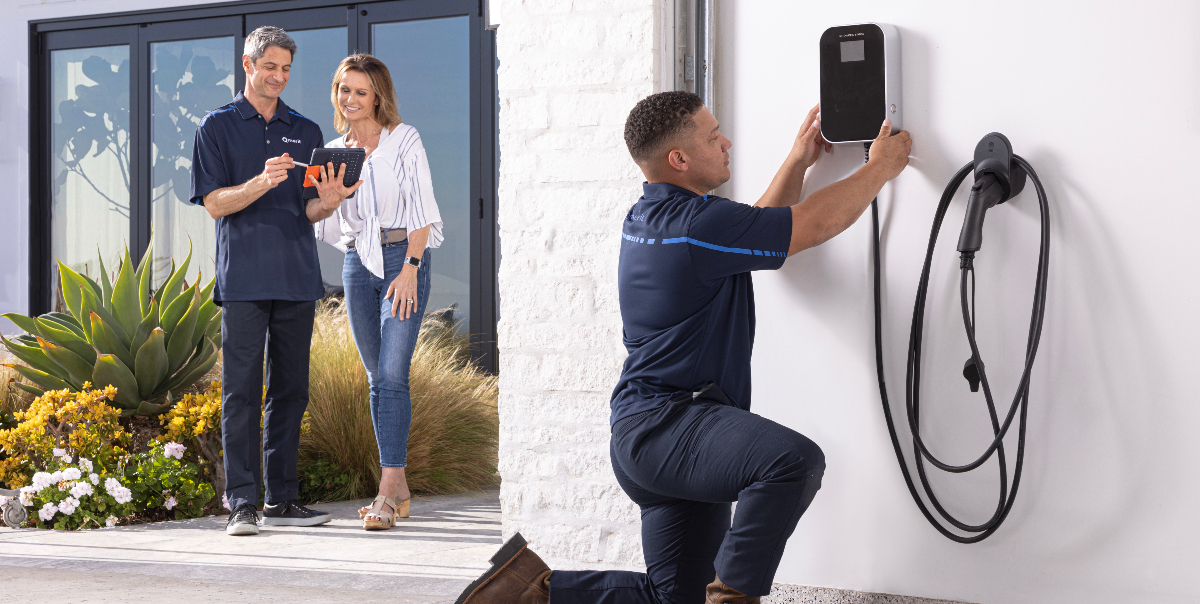
The interest in EV charging infrastructure among Winnipeg commercial and residential property owners has grown considerably over the past few years. With that growth comes a predictable question: what does the installation actually involve, and who should be doing it? Understanding what professional EV charging station installers do helps property owners make informed decisions about their projects and avoid the problems that come with cutting corners on this kind of work.
Electrical Load Assessment: The Critical First Step
Before any charger is specified, ordered, or mounted, qualified EV charging station installers conduct a load assessment of the building’s existing electrical system. This assessment determines the current panel capacity, identifies how much additional load the system can safely support, and establishes whether a panel upgrade is required before installation can proceed.
Skipping this step is the most consequential mistake in EV charger installation. A Level 2 charger draws a sustained high current load for hours at a time. Installing one on an already-loaded panel creates overload conditions that cause nuisance tripping, and can create safety hazards that are difficult and expensive to correct after the fact.
Equipment Selection and Specification
Professional EV charging station installers help property owners select the right equipment for their specific application. For residential properties, a Level 2 charger rated for the vehicle and the available electrical capacity is the standard choice. For commercial properties, the decision is more complex: the number of units, their charging speed, network connectivity requirements for access management, connector types, and whether the application warrants Level 3 DC fast charging all need to be evaluated.
Equipment selection for outdoor installations in Winnipeg also needs to account for Manitoba’s climate. EV charging station installers working in this region specify units and enclosures rated for the temperature extremes the equipment will face through the winter months.
Permitting, Installation, and Inspection
EV charger installation in Manitoba involves significant electrical work that requires a permit and subsequent inspection by the authority having jurisdiction. Qualified EV charging station installers manage this process as a standard part of the project. They submit permit applications before work begins, perform the installation to the standards required for inspection, and coordinate the inspection process through to approval.
The physical installation work performed by professional EV charging station installers includes running conduit from the panel to the charger location, pulling correctly sized dedicated conductors, installing a dedicated circuit breaker of the appropriate rating, mounting the charger unit, making all electrical connections, and completing cable management for a clean and safe finished installation.
Testing and Commissioning
After installation, the system is tested under load to confirm it operates as intended. The charger communicates correctly, the circuit carries the rated current without issue, and all connections are verified before the system is handed over for theme. For networked commercial chargers, commissioning also includes configuration of the network connection, access settings, and theme monitoring parameters.
Trusted electrical service providers like Edison Electric are experienced EV charging station installers for residential and commercial properties throughout Winnipeg. From load assessment and equipment specification through to permitting, installation, and inspection coordination, their licensed team manages the complete process.

 Arabic
 French
 Spanish
 Portuguese
 Deutsch
 Turkish
 Dutch
Dutch
 Italiano
 Russian
 Romaian
 Portuguese (Brazil)
 Greek
Greek