
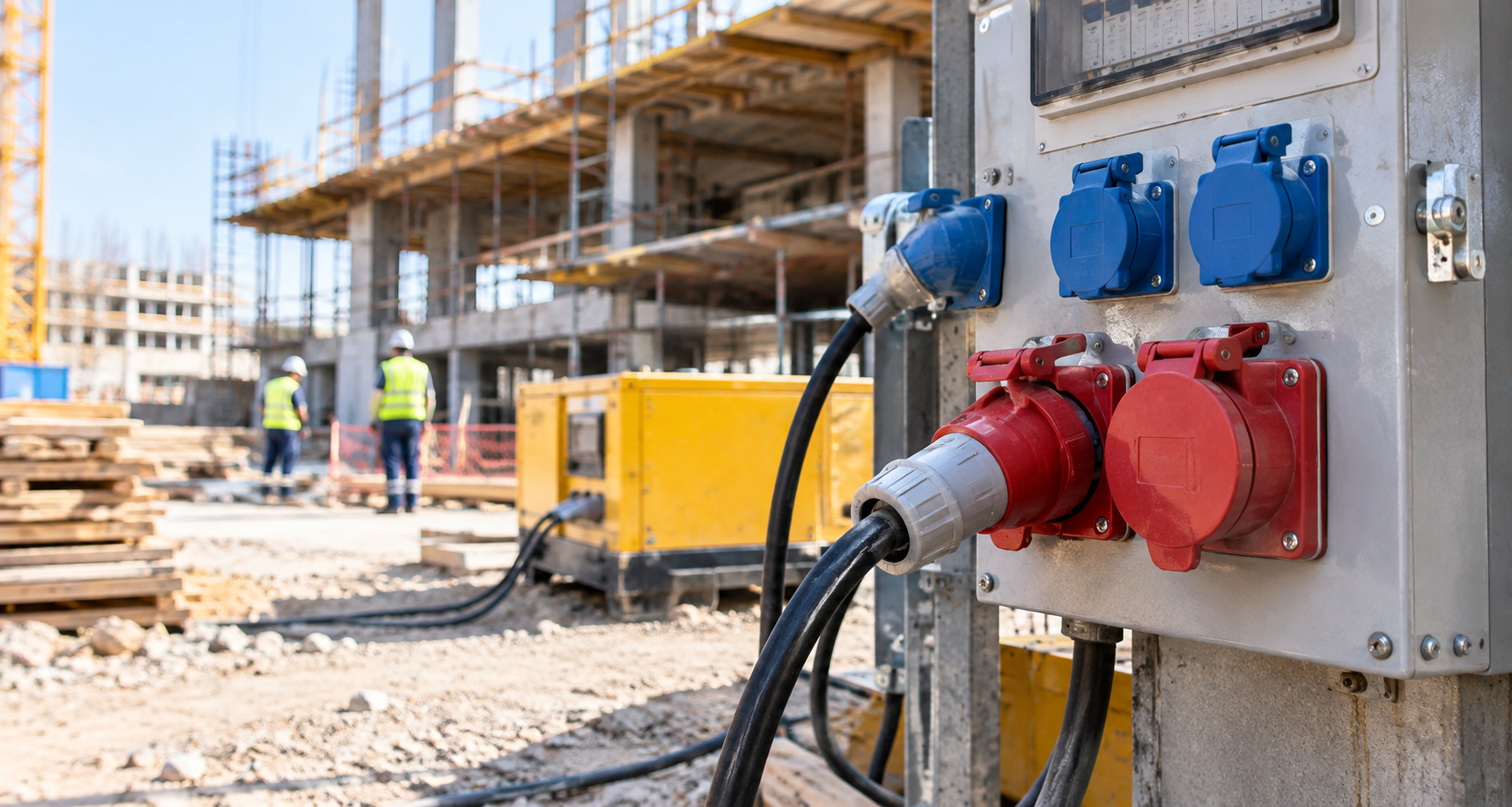
Walk onto a busy construction site and you'll see power being used everywhere—from drills and grinders to welding equipment, lighting systems, pumps, and temporary distribution boards. With so much electrical equipment operating in changing and often harsh conditions, ordinary household plugs and sockets aren't always suitable.
That's where industrial plugs and sockets come in. Designed for demanding environments, they provide a secure connection while helping construction teams distribute electrical power safely and efficiently.
Why Are Industrial Plugs and Sockets Important on Construction Sites?
Construction sites are rarely clean, dry, or predictable. Electrical connections may be exposed to dust, moisture, vibration, impact, and frequent movement. Equipment also gets connected and disconnected regularly as work progresses from one area to another.
Industrial plugs and sockets are built with these conditions in mind. Depending on their design and rating, they can offer greater mechanical durability, protection against environmental exposure, and secure connections compared with standard domestic products.
For UAE construction projects, this can be particularly relevant because outdoor work areas may also face high temperatures, dust, and occasional moisture.
Common Construction Site Applications
Powering Portable Tools
Electric drills, saws, grinders, mixers, and other portable equipment often need temporary power connections. Industrial sockets can provide suitable connection points for this equipment when the electrical specifications match.
Temporary Power Distribution
Large construction projects may use temporary distribution boards to supply different work zones. Industrial plugs and sockets help connect equipment and distribution equipment while allowing power to be managed across the site.
Generators and Heavy Equipment
Construction generators frequently supply power where permanent electrical infrastructure isn't available. Properly rated industrial connectors can help connect generators to temporary electrical systems and heavy-duty equipment.
Site Lighting
Construction continues after daylight hours on many projects. Industrial connections can be used as part of temporary lighting arrangements, provided the selected components are appropriate for the installation environment.
What Should You Consider Before Choosing Them?
Not every industrial connector is suitable for every application. Before purchasing, consider the current rating, voltage, number of poles, frequency, IP protection rating, connector configuration, cable size, and environmental conditions.
For example, a socket used in a dusty outdoor location may need a different level of protection from one installed inside a temporary site office.
Mechanical strength also matters. Construction equipment can be moved frequently, and connectors may experience accidental knocks or repeated handling. A secure design helps reduce the risk of loose connections and unnecessary downtime.
Safety Goes Beyond the Connector
Even the best industrial plugs and sockets need to be installed and used correctly. Construction electrical systems should be designed and maintained by qualified professionals, with suitable protective devices, earthing, cable management, inspection, and testing.
A connector's IP rating, for instance, describes its resistance to specified ingress conditions; it doesn't make an incorrectly installed electrical system safe by itself.
Conclusion
Construction sites depend on flexible electrical systems, but flexibility shouldn't come at the expense of dependable connections. Industrial plugs and sockets provide a practical way to connect tools, temporary distribution systems, generators, and lighting equipment in demanding work environments.
The right selection depends on the actual application—not simply the appearance or size of the connector. Checking electrical ratings, environmental protection, mechanical requirements, and installation conditions can help create a safer and more reliable temporary power setup.
For UAE construction projects, choosing properly specified industrial electrical accessories and having them installed by qualified professionals is a practical step toward dependable site power.
FAQs
Can industrial plugs and sockets be used outdoors?
Yes, suitable models can be used outdoors when their ratings match the environmental conditions. Moisture, dust, temperature, and mechanical exposure should all be considered.
Why are they preferred for construction sites?
They are designed for demanding electrical environments and can provide robust, secure connections for temporary power distribution and equipment.
What does an IP rating mean?
An IP rating indicates the level of protection an enclosure provides against ingress of solids and liquids under defined testing conditions.
How do I choose the right industrial socket?
Start with the equipment's voltage and current requirements, then consider poles, frequency, IP protection, installation conditions, and applicable electrical standards.

 Arabic
 French
 Spanish
 Portuguese
 Deutsch
 Turkish
 Dutch
Dutch
 Italiano
 Russian
 Romaian
 Portuguese (Brazil)
 Greek
Greek