
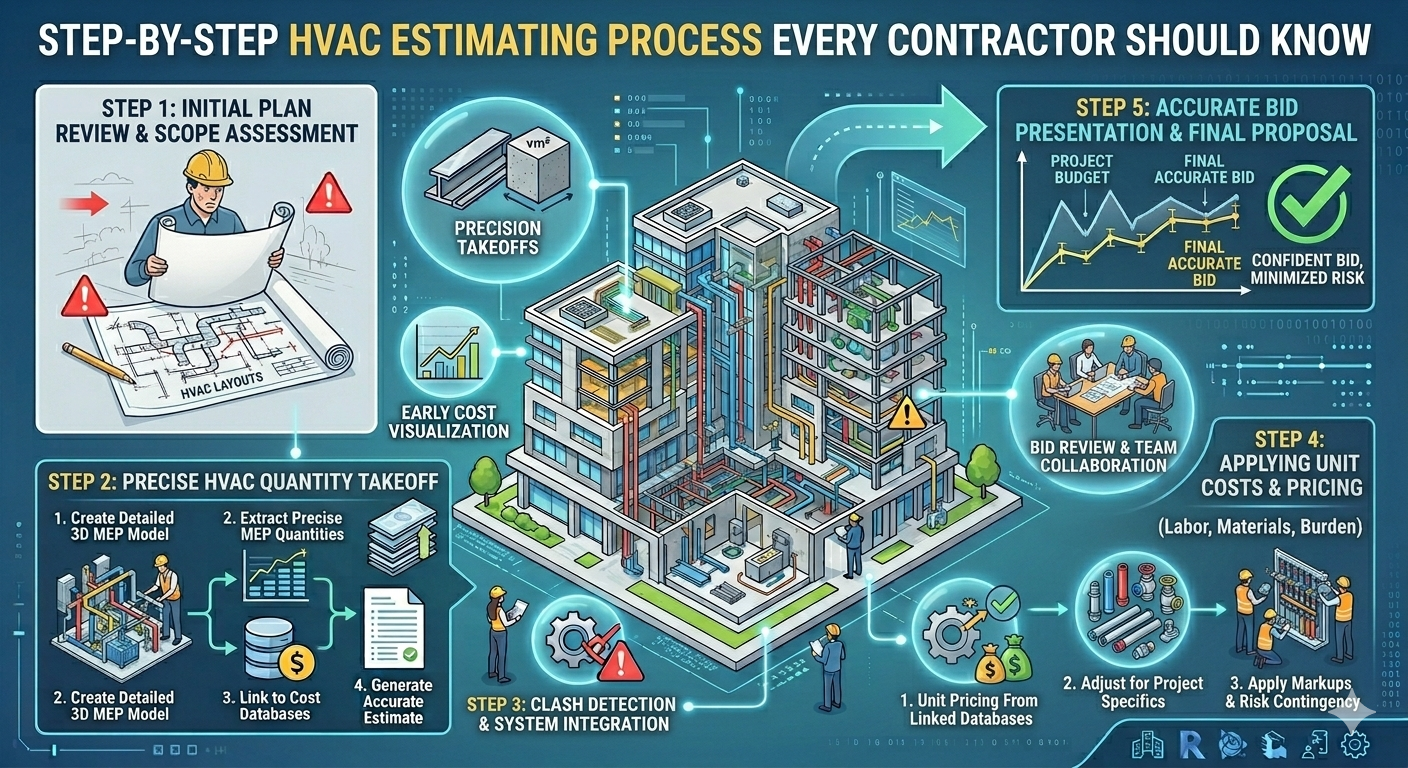
In the competitive construction industry, HVAC systems represent a significant portion of overall project costs. From ductwork and equipment to insulation and controls, heating, ventilation, and air conditioning systems require detailed planning and accurate budgeting. A small mistake in estimating can result in major financial losses, delays, or reduced profit margins.That’s why understanding the step-by-step HVAC estimating process is essential for every contractor. Accurate HVAC cost estimating not only improves bid accuracy but also enhances profitability, resource management, and client satisfaction. In this guide, we’ll break down the HVAC estimating process in a clear and practical way that contractors can apply to residential, commercial, and industrial projects.
Why HVAC Estimating Is So Important
HVAC systems are complex and involve multiple components working together. Unlike simple construction elements, HVAC installations include mechanical equipment, sheet metal ductwork, piping, controls, insulation, and labor-intensive installations.
Accurate HVAC estimating helps contractors.
-
Submit competitive and profitable bids
-
Avoid material shortages
-
Reduce costly change orders
-
Improve project scheduling
-
Maintain budget control
-
Increase overall efficiency
A structured estimating process ensures nothing is overlooked.
Step 1: Review Project Plans and Specifications
The first step in HVAC estimating is carefully reviewing project drawings and specifications. Contractors must analyze:
-
Mechanical drawings
-
Architectural plans
-
equipment schedules
-
Duct layouts
-
Project specifications
-
Scope of work documents
Understanding the full scope prevents underestimating or missing critical components. Pay close attention to system types, design requirements, material standards, and special installation conditions.Thorough plan review reduces the risk of unexpected costs later in the project.
Step 2: Perform Accurate Quantity Takeoffs
Once the plans are reviewed, the next step is performing detailed HVAC quantity takeoffs. This involves measuring and calculating all required materials, including:
-
Ductwork (linear feet and fittings)
-
Piping (length, diameter, insulation)
-
Air handling units
-
Condensers and chillers
-
VAV boxes
-
Grilles and diffusers
-
Dampers and controls
-
Hangers and supports
Accurate takeoffs are the foundation of precise HVAC estimating. Errors at this stage directly affect the final budget.Using digital takeoff software can significantly improve accuracy and efficiency compared to manual methods.
Step 3: Determine Material Costs
After calculating quantities, the next step is assigning accurate material pricing. HVAC material costs can fluctuate due to:
-
Steel price changes
-
Copper market volatility
-
Supply chain disruptions
-
Regional supplier pricing
Contractors should obtain updated quotes from suppliers and verify bulk pricing discounts where possible.Including realistic pricing ensures that estimates reflect actual market conditions rather than outdated cost data.
Step 4: Calculate Labor Costs
Labor is often the largest expense in HVAC projects. Estimating labor requires analyzing:
-
Installation complexity
-
Project size
-
Crew productivity rates
-
Working conditions
-
Local labor rates
Labor costs should include:
-
Sheet metal installation
-
Equipment placement
-
Piping installation
-
Testing and balancing
-
System commissioning
Accurate labor forecasting prevents underbidding and protects profit margins.
Step 5: Include Equipment and Tool Costs
HVAC installation requires specialized tools and heavy equipment such as lifts, cranes, welding machines, and testing instruments.
Estimators must account for:
-
Equipment rental fees
-
Transportation costs
-
Fuel expenses
-
Maintenance and wear
Ignoring equipment costs can significantly reduce project profitability.
Step 6: Factor in Overhead and Indirect Costs
Beyond materials and labor, contractors must include overhead costs such as:
-
Office expenses
-
Insurance
-
Permits
-
Project management
-
Supervision
-
Administrative support
These indirect costs are often overlooked but play a major role in overall project budgeting.
Adding a realistic overhead percentage ensures long-term financial sustainability.
Step 7: Add Contingency Allowances
Construction projects always carry some level of risk. HVAC estimating should include contingency funds for:
-
Design revisions
-
Material price increases
-
Site condition changes
-
Unexpected installation challenges
A well-calculated contingency protects contractors from absorbing unforeseen expenses.
Step 8: Conduct Value Engineering Review
Before finalizing the estimate, contractors should evaluate opportunities for cost savings without compromising system performance.
This may include:
-
Alternative duct materials
-
Efficient equipment options
-
Layout optimization
-
Improved installation methods
Value engineering enhances competitiveness while maintaining quality standards.
Step 9: Finalize Bid Pricing and Profit Margin
After calculating all direct and indirect costs, contractors add their desired profit margin.
The final bid should reflect:
-
Total project cost
-
Competitive market positioning
-
Company profit goals
-
Risk factors
A clear and transparent proposal builds client trust and increases win rates.
Step 10: Review and Quality Check the Estimate
Before submission, conduct a final review to ensure:
-
No items are missing
-
Pricing is updated
-
Calculations are accurate
-
Scope aligns with project documents
-
Assumptions are clearly stated
A second review often catches small errors that could otherwise lead to significant financial impact.
Common HVAC Estimating Mistakes to Avoid
Even experienced contractors can make estimating errors. Some common mistakes include:
-
Rushing the takeoff process
-
Using outdated material prices
-
Underestimating labor productivity
-
Ignoring small fittings and accessories
-
Failing to include indirect costs
Avoiding these mistakes significantly improves project cost accuracy.
How Technology Improves HVAC Estimating
Modern HVAC estimating software and BIM integration allow contractors to:
-
Automate quantity takeoffs
-
Update costs in real time
-
Detect clashes early
-
Improve collaboration
-
Reduce manual calculation errors
Digital tools make the estimating process faster, more precise, and more competitive in today’s market.
Benefits of Following a Structured HVAC Estimating Process
When contractors follow a systematic HVAC estimating process, they experience:
-
Better budget accuracy
-
Higher profit margins
-
Fewer change orders
-
Improved scheduling
-
Stronger supplier relationships
-
Increased client satisfaction
Consistency in estimating builds long-term business growth and reputation.
Professional HVAC Estimating Support
Many contractors choose to outsource HVAC estimating to experienced professionals to save time and improve accuracy. Professional estimators bring advanced tools, industry knowledge, and updated pricing databases to the process.
SMA MEP Estimate provides detailed HVAC estimating services that help contractors reduce errors, control costs, and submit competitive bids with confidence.
Why Accurate HVAC Estimating Is Essential in Today’s Market
With fluctuating material prices, labor shortages, and increased project complexity, precise HVAC estimating is more important than ever. Contractors who rely on guesswork or outdated methods risk losing money and damaging client relationships.A structured, step-by-step HVAC estimating process ensures financial control, operational efficiency, and project success.
Conclusion
The HVAC estimating process is a critical component of successful construction projects. By carefully reviewing plans, performing detailed takeoffs, calculating accurate material and labor costs, and including overhead and contingencies, contractors can significantly reduce financial risk.Following a step-by-step HVAC estimating approach improves budget accuracy, strengthens competitive bidding, and enhances overall profitability. In today’s demanding construction environment, precise HVAC estimating is not just beneficial—it is essential for sustainable business growth.

 Arabic
 French
 Spanish
 Portuguese
 Deutsch
 Turkish
 Dutch
Dutch
 Italiano
 Russian
 Romaian
 Portuguese (Brazil)
 Greek
Greek