
INTRODUCTION
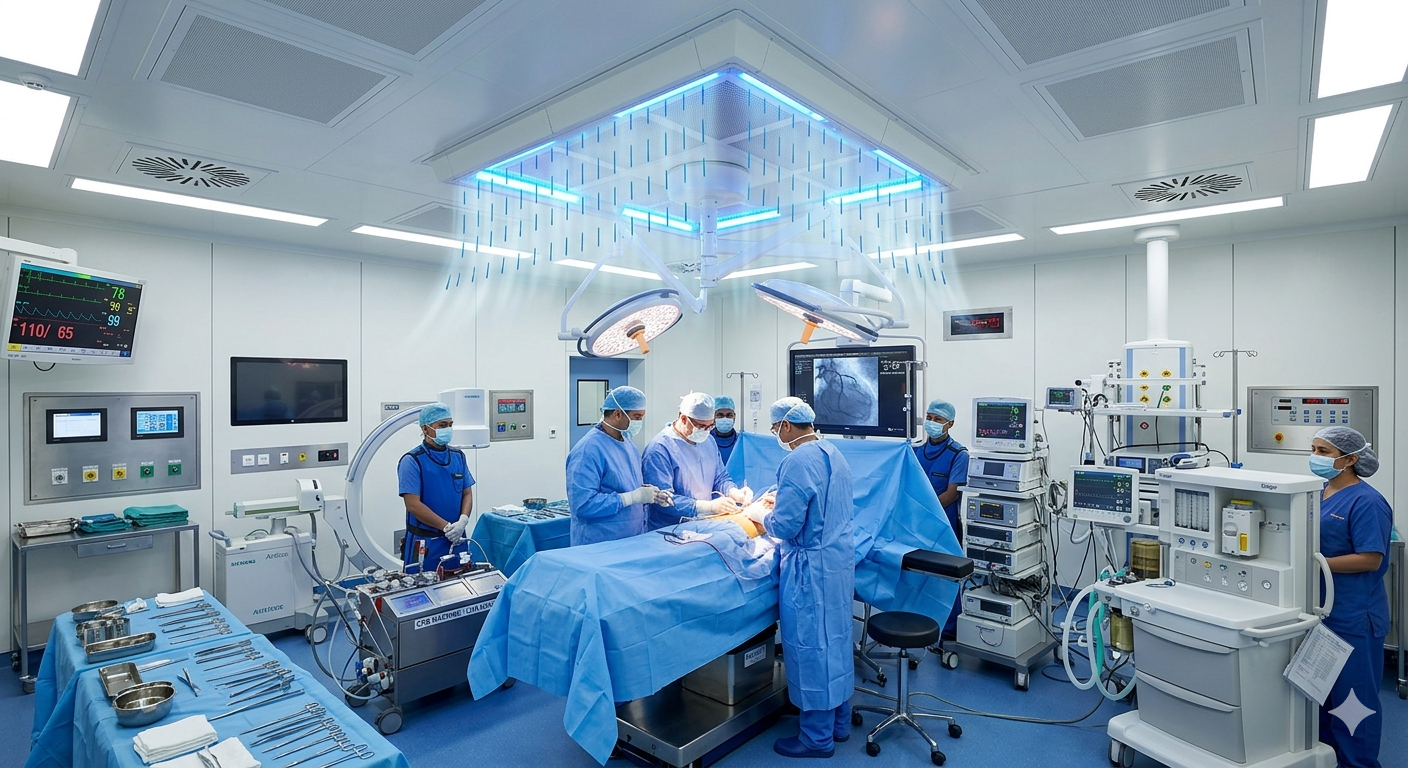
Heart surgeries are among the most complex and delicate medical procedures performed in modern healthcare. These operations require an extremely controlled surgical environment, advanced medical equipment, and the highest level of infection control. This is where a Modular Cardiac Operation Theatre becomes essential. A Cardiac Modular Operation Theatre is specifically designed to meet the strict requirements of cardiovascular procedures by providing a sterile, technologically advanced, and highly organized surgical space.
In recent years, hospitals across the world have been adopting modular operation theatres to enhance surgical precision, improve patient safety, and maintain international healthcare standards. In this blog, we will explore the importance of modular cardiac operation theatres, their key components, benefits, and how they contribute to successful heart surgeries.
Understanding a Modular Cardiac Operation Theatre
A Modular Cardiac Operation Theatre is a pre-engineered surgical room designed specifically for heart-related procedures such as bypass surgery, valve replacement, and other cardiovascular interventions. Unlike traditional operation theatres, modular OTs are constructed using prefabricated panels and integrated systems that ensure a sterile and controlled environment.
A Cardiac Modular Operation Theatre is designed with advanced airflow management, seamless surfaces, integrated medical utilities, and specialized surgical lighting. These features help create an optimal environment for surgeons and medical staff to perform complex heart surgeries safely and efficiently.
Cardiac surgeries often require multiple specialists, advanced monitoring systems, and precise coordination among surgical teams. A modular setup helps streamline all these elements, ensuring that every component works together smoothly.
Why Heart Surgeries Require Specialized Operation Theatres
Cardiac procedures involve operating on the heart and major blood vessels, which are vital organs responsible for maintaining life. Even a small infection or contamination during surgery can lead to severe complications.
This is why hospitals require a Cardiac Modular Operation Theatre that provides:
- Strict infection control
- Advanced airflow systems
- High-level sterilization
- Precision surgical lighting
- Seamless integration of medical equipment
These features create a safe surgical environment that minimizes risks and supports successful heart procedures.
Key Components of a Modular Cardiac Operation Theatre
A modular cardiac operation theatre includes several advanced systems designed to maintain sterility, improve workflow, and enhance surgical performance.
1. Modular Wall and Ceiling Panels
The walls and ceilings in a modular operation theatre are made of prefabricated panels with smooth, seamless surfaces. These panels prevent the accumulation of dust and bacteria.
Benefits include:
- Easy cleaning and maintenance
- Antibacterial surfaces
- Long durability
- Hygienic environment
The panels also allow easy installation of electrical fittings, medical gas outlets, and monitoring systems.
2. Laminar Airflow System
The laminar airflow system is one of the most important features in a Cardiac Modular Operation Theatre. It ensures that clean air flows uniformly across the surgical area.
Key benefits include:
- Continuous supply of filtered air
- Reduced airborne contamination
- Improved infection control
- Stable surgical environment
This airflow system plays a crucial role in preventing surgical site infections during heart surgeries.
3. HEPA Filtration
High Efficiency Particulate Air (HEPA) filters are used to remove microscopic particles from the air. These filters can capture up to 99.97% of airborne contaminants.
HEPA filtration helps eliminate:
- Dust particles
- Bacteria
- Viruses
- Other airborne microorganisms
This ensures the highest level of air purity inside the operation theatre.
4. Surgical Lighting System
Heart surgeries require extremely precise visual clarity. Advanced surgical lights are installed in modular cardiac operation theatres to provide bright, shadow-free illumination.
These lighting systems offer:
- Adjustable brightness levels
- High color accuracy
- Minimal heat emission
- Better visibility for surgeons
Proper lighting ensures accuracy during delicate cardiac procedures.
5. Operation Theatre Control Panel
A central OT control panel allows medical staff to manage and monitor various environmental parameters within the operation theatre.
It controls:
- Temperature
- Humidity levels
- Air pressure
- Lighting intensity
- Gas pipeline systems
This centralized control ensures optimal conditions for performing heart surgeries.
6. Medical Gas Pipeline System
Cardiac surgeries require multiple medical gases such as oxygen, compressed air, nitrous oxide, and vacuum systems.
A Cardiac Modular Operation Theatre integrates these pipelines into the wall panels to ensure safe and efficient gas supply during surgical procedures.
Benefits include:
- Organized system layout
- Easy access for medical staff
- Reduced clutter inside the OT
7. Hermetically Sealed Doors
Hermetically sealed sliding doors are installed to maintain controlled air pressure and prevent contamination.
These doors provide:
- Airtight sealing
- Smooth sliding mechanism
- Automatic operation
- Enhanced infection control
They play an important role in maintaining the sterile environment required for heart surgeries.
Benefits of a Modular Cardiac Operation Theatre
Modular cardiac operation theatres offer several advantages compared to conventional operating rooms.
1. Improved Infection Control
Infections are one of the biggest risks during heart surgeries. Modular OTs use advanced filtration systems, antibacterial materials, and controlled airflow to reduce infection risks significantly.
2. Faster Installation
Traditional operating theatres can take months to build. Modular systems are prefabricated and can be installed much faster, allowing hospitals to expand surgical capacity quickly.
3. Enhanced Surgical Efficiency
The well-organized layout of a Modular Cardiac Operation Theatre allows surgeons and medical staff to work more efficiently.
Proper equipment placement and improved visibility help surgical teams perform procedures with greater precision.
4. Long-Term Cost Savings
Although the initial investment may be higher, modular operation theatres reduce long-term maintenance costs. Individual components can be replaced easily without reconstructing the entire room.
5. Customizable Design
Hospitals can customize modular cardiac OTs based on their specific requirements, including equipment integration, lighting systems, and layout design.
6. Compliance with International Healthcare Standards
Modular operation theatres are designed to meet international healthcare and infection control standards, making them suitable for advanced surgical procedures.
Role of Modular Operation Theatres in Advanced Cardiac Care
The field of cardiac surgery has evolved significantly with the introduction of minimally invasive procedures, robotic surgery, and advanced monitoring systems.
A Cardiac Modular Operation Theatre supports these innovations by providing a high-tech surgical environment that integrates modern equipment seamlessly.
Key advantages include:
- Support for advanced surgical technology
- Improved coordination among surgical teams
- Enhanced patient safety
- Better surgical outcomes
As healthcare systems continue to modernize, modular operation theatres will play an increasingly important role in supporting complex cardiac procedures.
Future of Modular Cardiac Operation Theatres
With the rapid advancement of medical technology, modular operation theatres are expected to become the standard in hospitals worldwide. Future cardiac OTs will incorporate smart monitoring systems, automated environmental controls, and advanced infection prevention technologies.
Hospitals are also focusing on building operation theatres that support digital integration, real-time data monitoring, and robotic-assisted surgeries.
These developments will further enhance the safety and effectiveness of cardiac procedures.
Frequently Asked Questions (FAQs)
1. What is a Modular Cardiac Operation Theatre?
A Modular Cardiac Operation Theatre is a specially designed surgical room used for heart surgeries. It includes advanced systems such as laminar airflow, HEPA filtration, modular panels, and integrated medical equipment to maintain a sterile and controlled surgical environment.
2. Why is a Cardiac Modular Operation Theatre important for heart surgeries?
A Cardiac Modular Operation Theatre is important because it provides a highly sterile environment, advanced airflow control, and specialized surgical infrastructure required for complex heart procedures.
3. What are the main features of a Modular Cardiac Operation Theatre?
Key features of a Modular Cardiac Operation Theatre include modular wall panels, laminar airflow systems, HEPA filters, surgical lighting, hermetically sealed doors, medical gas pipelines, and centralized control panels.
4. How does a Cardiac Modular Operation Theatre reduce infection risks?
A Cardiac Modular Operation Theatre reduces infection risks by using HEPA filtration, controlled airflow systems, antibacterial surfaces, and sealed environments that prevent airborne contamination.
5. Can a Modular Cardiac Operation Theatre be customized?
Yes, a Cardiac Modular Operation Theatre can be customized according to hospital requirements, including layout design, equipment integration, airflow systems, and surgical lighting.
Conclusion
Heart surgeries demand the highest standards of safety, precision, and hygiene. A well-designed modular operation theatre ensures that surgeons have the ideal environment to perform life-saving procedures with confidence and efficiency. By integrating advanced airflow systems, sterile materials, and modern medical infrastructure, hospitals can significantly improve surgical outcomes and patient safety. Innovative healthcare infrastructure solutions developed by Altus Airflow help hospitals create advanced operation theatres that support complex cardiac surgeries while maintaining global medical standards.
Read Our Previous Blog------>What is a Modular Gynaec Operation Theatre?

 Arabic
 French
 Spanish
 Portuguese
 Deutsch
 Turkish
 Dutch
Dutch
 Italiano
 Russian
 Romaian
 Portuguese (Brazil)
 Greek
Greek