
When starting a plumbing project in Pakistan or anywhere else, one of the first decisions you will face is choosing the right pipe type. For many homeowners, contractors, and engineers, the choice often comes down to Schedule 40 Pipe and Schedule 80 Pipe. Both are widely used in residential, commercial, and industrial settings, but they are not interchangeable. Selecting the wrong type could mean overbuilding your system and wasting money or underbuilding it and facing leaks, bursts, and costly repairs. In this article, we will explore exactly what distinguishes Schedule 40 from Schedule 80, examine their strengths and weaknesses, and help you determine which one best suits your specific needs.
What Does “Schedule” Mean in Plumbing Pipes?
In plumbing and piping terminology, “Schedule” refers to the wall thickness of the pipe. It is not a measure of size but rather a standardized classification that affects the pipe’s pressure capacity, weight, and internal diameter. The higher the schedule number, the thicker the wall. This increased wall thickness allows the pipe to handle greater internal pressures, but also slightly reduces the flow capacity due to a smaller inside diameter. For instance, Schedule 40 and Schedule 80 are two of the most common types used in PVC and CPVC piping systems, with Schedule 80 having thicker walls and a higher pressure rating. Understanding this distinction is essential because wall thickness impacts both safety and efficiency.
What is Schedule 40 Pipe?
Schedule 40 Pipe is considered the standard choice for most residential and light commercial plumbing systems. It is available in both PVC (Polyvinyl Chloride) for cold water applications and CPVC (Chlorinated Polyvinyl Chloride) for hot water applications. This pipe type has medium wall thickness, offering a balance between durability and cost-effectiveness. Schedule 40 typically handles pressures up to 450 PSI for smaller diameters, though exact ratings vary by size. Its relatively lightweight design makes it easy to handle, transport, and install, reducing labor costs. In Pakistan, Schedule 40 Pipe and fittings are widely available from reputable manufacturers like Adamjee Dura Built, meeting ASTM and NSF standards to ensure they are safe for potable water use.
The versatility of Schedule 40 is one of its greatest strengths. It can be used for potable water supply lines, drainage systems, irrigation setups, and even certain venting applications. Its smooth internal surface minimizes friction, allowing for better water pressure and reduced sediment buildup. For residential homeowners, Schedule 40 often provides more than enough strength for daily plumbing needs while keeping material and installation costs in check.
What is Schedule 80 Pipe?
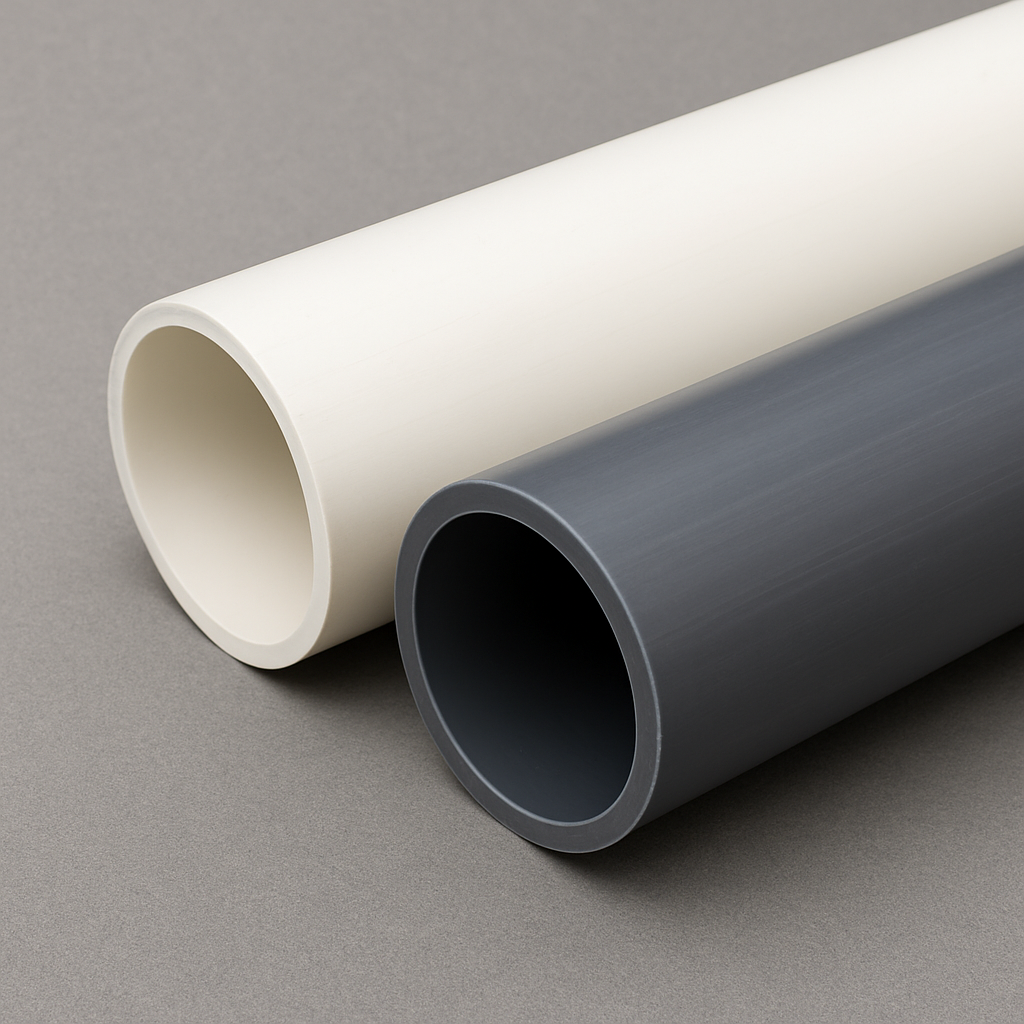
Schedule 80 Pipe is designed for heavy-duty applications where higher pressures and harsher conditions are present. Made from the same PVC or CPVC material as Schedule 40, its primary difference lies in its significantly thicker walls. This added thickness increases the pipe’s pressure rating, making it ideal for industrial systems, chemical processing lines, and high-pressure water distribution. Schedule 80 pipes typically come in dark gray for PVC and light gray for CPVC, distinguishing them visually from the white color of most Schedule 40 pipes.
Due to the thicker walls, Schedule 80 pipes are heavier and slightly more challenging to install than Schedule 40, but they offer unmatched resilience in demanding environments. Their higher pressure capacity comes at the cost of a reduced internal diameter, which can marginally lower flow rates. However, in high-pressure systems, this trade-off is often necessary to ensure safety and longevity.
Key Differences Between Schedule 40 and Schedule 80 Pipes
The most obvious difference between the two is wall thickness. For example, a 1-inch Schedule 40 PVC pipe has a wall thickness of approximately 0.133 inches, while a Schedule 80 pipe of the same size has a wall thickness of around 0.179 inches. This difference directly affects the pressure rating—Schedule 80 can handle pressures up to 50% higher than Schedule 40 in many cases.
Weight is another differentiating factor. Schedule 80 pipes are noticeably heavier, which impacts both handling and installation time. Flow capacity also varies because thicker walls in Schedule 80 reduce the inside diameter. This means that while Schedule 40 offers slightly better water flow for the same nominal size, Schedule 80 offers that flow for added strength. In terms of aesthetics and identification, Schedule 40 pipes are usually white, while Schedule 80 pipes are often gray, helping installers distinguish them quickly on the job site.
Pros and Cons of Each Pipe Type
Schedule 40’s biggest advantage is its balance of strength and affordability. It is easier to work with, requires less support during installation, and is sufficient for most residential systems. However, it does have lower pressure and temperature limits compared to Schedule 80, making it unsuitable for certain industrial or high-stress environments.
Schedule 80 excels in strength and pressure tolerance, making it perfect for applications that demand reliability under extreme conditions. The downside is that it is more expensive, heavier, and slightly reduces water flow capacity. For many household projects, its capabilities may exceed requirements, leading to unnecessary costs.
Applications: Where Each Pipe Type Works Best
Schedule 40 pipes are ideal for residential potable water lines, drainage and waste systems, irrigation networks, and venting applications. They are also used for light commercial installations where pressure requirements are moderate. In Pakistan, these pipes are common in housing developments and renovation projects due to their availability and ease of installation.
Schedule 80 pipes are the go-to choice for industrial plants, high-pressure water lines, and chemical handling systems. They are also used in certain commercial plumbing systems where durability is critical, such as in manufacturing facilities or high-rise buildings. In outdoor installations subject to physical impact or extreme pressure changes, Schedule 80’s thicker walls provide extra safety.
Cost Considerations
Cost is a significant factor when choosing between these two schedules. Schedule 80 pipes generally cost 30% to 50% more than their Schedule 40 counterparts of the same size. The higher material cost, combined with increased labor requirements due to their weight, can raise overall project expenses. For projects where the extra strength is unnecessary, opting for Schedule 40 can save substantial money without compromising performance.
However, when working in high-pressure environments or with hazardous fluids, the added investment in Schedule 80 can prevent costly failures, making it the more economical choice in the long run.
How to Decide Which Schedule Pipe is Right for Your Project
The best way to decide between Schedule 40 and Schedule 80 is to assess the specific requirements of your project. Consider the maximum operating pressure and temperature, the type of fluids being transported, the installation environment, and relevant building codes. For residential plumbing in Pakistan, Schedule 40 Pipe and fittings often meet all necessary requirements for water supply and drainage. On the other hand, industrial or high-pressure systems may demand the strength of Schedule 80.
It’s also worth consulting with a qualified plumber or engineer, especially for complex or large-scale installations. Their expertise can help you avoid overbuilding or underbuilding your system.
Common Misconceptions
One of the most common misconceptions is that Schedule 80 is always better because it is stronger. While it does have higher pressure ratings, this doesn’t mean it is the right choice for every application. Using Schedule 80 in a low-pressure residential system is like using a sledgehammer to crack a nut—it works, but it’s overkill.
Another myth is that Schedule 40 cannot handle hot water, but this is only true for standard PVC. CPVC Schedule 40 is designed for high-temperature use, making it suitable for hot water lines in homes. Additionally, some believe the two pipe types cannot be connected, but with the correct fittings and transition methods, they can be integrated into the same system.
Conclusion
Choosing between Schedule 40 and Schedule 80 pipes comes down to understanding your project’s unique needs. Schedule 40 offers a cost-effective, easy-to-install solution for most residential and light commercial applications, while Schedule 80 provides the added strength required for industrial and high-pressure environments. In Pakistan, where both types are readily available, making an informed choice ensures safety, efficiency, and cost savings. The key is to match the pipe to the project, rather than assuming one type is universally better.
FAQs
Q1: Can Schedule 40 and Schedule 80 pipes be connected together?
Yes, they can be connected with compatible fittings and proper transition methods.
Q2: Is Schedule 80 worth the extra cost for home plumbing?
Not usually—Schedule 40 is sufficient for most residential needs.
Q3: Do both types meet potable water standards?
Yes, provided they are certified by relevant bodies like NSF.
Q4: Which pipe lasts longer outdoors?
Both can last decades if protected from UV exposure, though Schedule 80 may resist impact damage better.

 Arabic
 French
 Spanish
 Portuguese
 Deutsch
 Turkish
 Dutch
Dutch
 Italiano
 Russian
 Romaian
 Portuguese (Brazil)
 Greek
Greek