
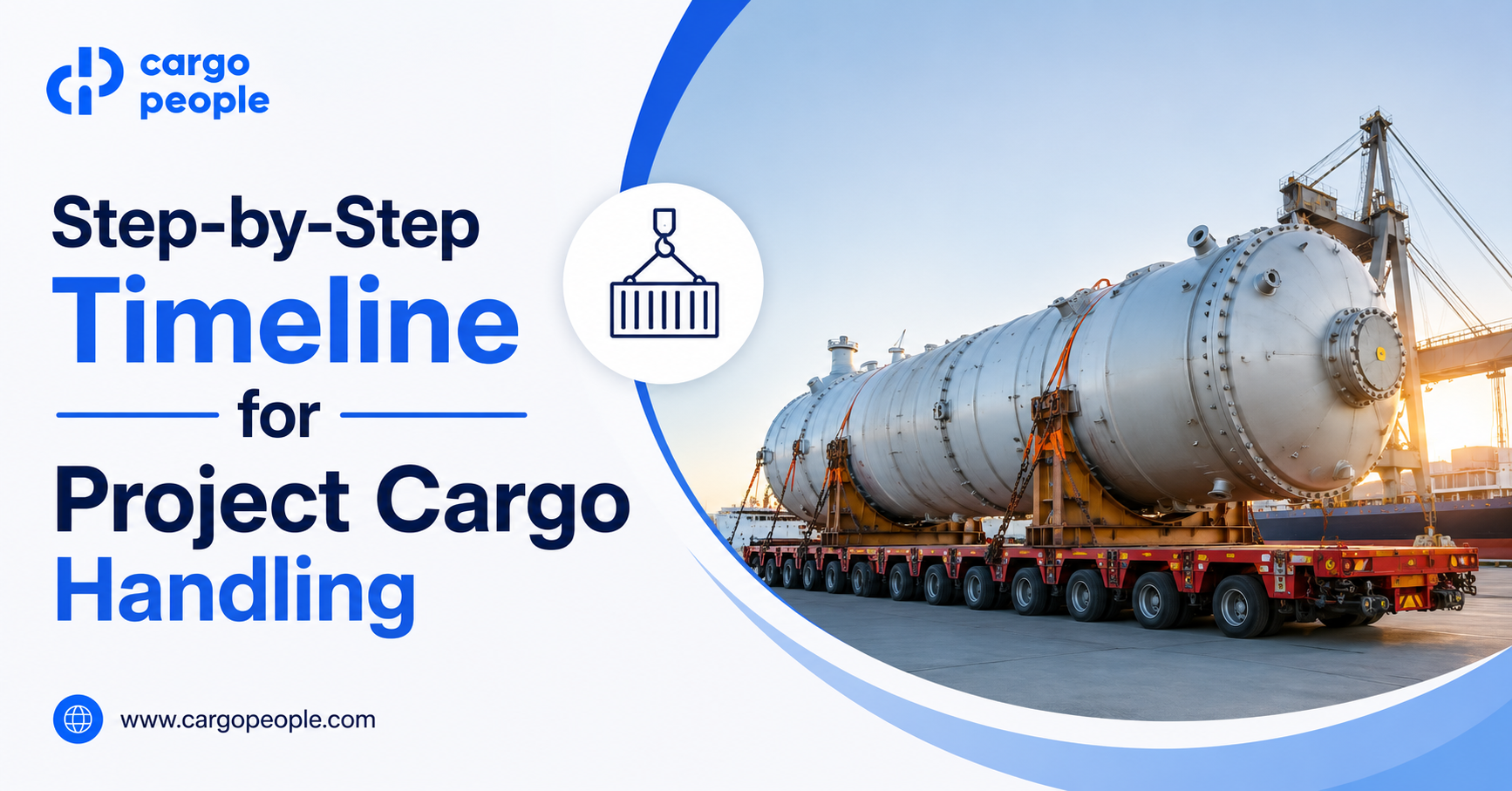
Project cargo handling requires careful planning because it usually involves heavy, oversized, or high-value cargo. These shipments cannot be managed like regular cargo, as they need special equipment, route planning, approvals, and safety arrangements. A step-by-step timeline helps businesses understand how the complete process works from planning to final delivery.
A proper project cargo timeline reduces delays, improves coordination, and ensures that every activity is completed in the right order. It also helps businesses manage costs, avoid risks, and deliver cargo safely to the project site.
Cargo Study and Requirement Analysis
The first step in project cargo handling is studying the cargo in detail. This includes checking the weight, dimensions, cargo type, handling sensitivity, pickup point, and final delivery location.
This stage helps logistics experts understand what type of transport, lifting equipment, packaging, and permissions will be required. A clear cargo study creates the foundation for a smooth and safe project cargo movement.
Planning the Handling Timeline
After understanding the cargo requirements, the next step is preparing the complete handling timeline. This timeline includes activities such as documentation, equipment arrangement, route survey, loading, transportation, unloading, and final delivery.
Proper timeline planning helps each team know its responsibilities in advance. It also reduces confusion and ensures better coordination between the client, transport team, warehouse team, customs team, and site team.
Route Survey and Transport Planning
For heavy or oversized cargo, route survey is very important. The selected route must be checked for road width, bridge capacity, height restrictions, turns, traffic conditions, and entry permissions.
Transport planning is done based on the route survey results. This helps choose the right vehicle, trailer, escort arrangement, and movement schedule to ensure safe cargo transportation.
Documentation and Approvals
Project cargo often requires several documents and approvals before movement. These may include transport permits, customs documents, insurance papers, packing details, safety approvals, and port or terminal permissions.
Completing documentation on time is an important part of the timeline. Any missing approval can stop the cargo movement and cause unnecessary delays in the project schedule.
Equipment and Resource Arrangement
Project cargo needs special equipment for safe handling. Depending on the cargo size and weight, cranes, forklifts, hydraulic trailers, low-bed trailers, lifting tools, and skilled manpower may be required.
Arranging these resources in advance ensures that loading and unloading can be completed smoothly. Proper equipment planning also reduces safety risks and prevents damage to the cargo.
Packing, Lashing, and Safety Preparation
Before transportation, the cargo must be packed and secured properly. Heavy machinery and oversized goods may need wooden packing, protective covering, lashing, bracing, or shock protection.
This step protects the cargo during handling and movement. Good safety preparation also helps avoid accidents during lifting, loading, transit, and unloading.
Loading and Dispatch
Once all arrangements are complete, the cargo is loaded using the planned equipment and method. Loading must be handled carefully by trained professionals because project cargo is often heavy, complex, and costly.
After loading, the cargo is secured properly on the vehicle or container. Final checks are done before dispatch to make sure the shipment is safe for movement.
Transit Monitoring and Coordination
During transit, the cargo movement is monitored regularly. Logistics teams track the shipment, coordinate with drivers, update the client, and manage any route or timing issues.
Strong coordination during this stage helps avoid delays and ensures that the cargo moves according to the planned timeline. Real-time updates also help project teams prepare for unloading at the destination.
Site Preparation and Unloading
Before the cargo reaches the destination, the delivery site must be ready. Space should be cleared, unloading equipment should be arranged, and the site team should be available.
Once the cargo arrives, unloading is done carefully using suitable equipment. Proper site preparation helps complete unloading faster and reduces the risk of damage or delay.
Final Inspection and Handover
After unloading, the cargo is inspected to check its condition. The delivery documents are verified, and the shipment is handed over to the client or project team.
Final inspection confirms that the cargo has reached safely and as per requirement. This step completes the project cargo handling timeline and helps maintain proper delivery records.
Importance of a Step-by-Step Project Cargo Timeline
A step-by-step timeline helps businesses manage project cargo with better control and accuracy. It ensures that planning, approvals, equipment, transport, and delivery are all handled in the correct sequence.
For large projects, even a small delay can affect installation, production, or construction schedules. A clear timeline helps avoid such problems and supports smooth project execution.
Learn More About Project Cargo Handling Solutions
If you are planning to move heavy, oversized, or special cargo, it is important to understand the complete timeline, route planning, approvals, and handling requirements in detail.
Read the complete guide here:
📞 Get Expert Support for Project Cargo Handling
If you need assistance with project cargo handling, heavy shipment planning, equipment arrangement, or logistics coordination, Cargo People Logistics can guide you at every step.
📞 +91 97174 65454
📧 wecare@cargopeople.com

 English
 Arabic
 French
 Spanish
 Portuguese
 Turkish
 Dutch
Dutch
 Italiano
 Russian
 Romaian
 Portuguese (Brazil)
 Greek
Greek