
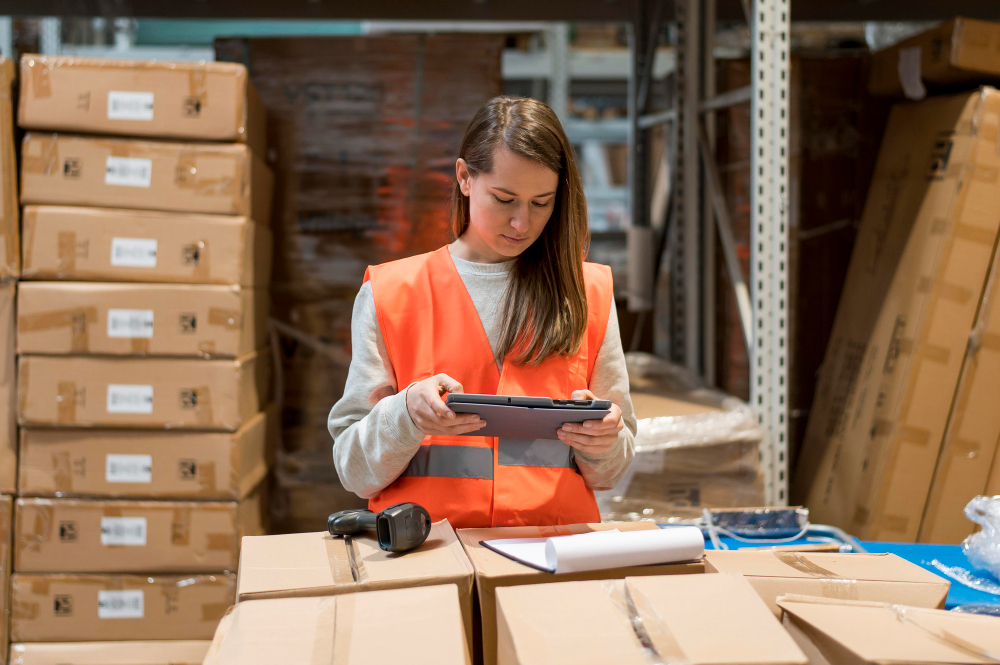
Logistics is the backbone of any business that handles products, deliveries, or supply chain operations. As companies grow, managing logistics efficiently becomes vital to maintaining customer satisfaction, reducing operational costs, and ensuring smooth supply chain performance. One of the biggest decisions businesses face is whether to manage logistics in-house or to outsource it to a professional logistics service provider.
Both approaches offer significant benefits, but they also come with challenges. Choosing the right one largely depends on your business size, growth plans, budget, and operational complexity. This article explains the key differences, advantages, challenges, and factors to consider when deciding between in-house and outsourced logistics services.
Understanding In-House Logistics
In-house logistics refers to the practice of managing all logistics operations internally using your own employees, systems, infrastructure, and vehicles. Businesses that use in-house logistics maintain complete control over their supply chain processes.
Advantages of In-House Logistics
1. Full Control Over Operations
Businesses have complete oversight of warehousing, packaging, shipping, and delivery processes. This allows greater customization and real-time decision-making.
2. Better Integration With Business Processes
Companies can align logistics functions with internal goals, priorities, and workflow systems.
3. Enhanced Customer Experience
Since everything is controlled internally, businesses can offer personalized delivery services, special handling, and quick adjustments.
4. Higher Transparency and Accountability
Issues can be monitored closely, and solutions can be applied instantly without depending on an external provider.
Challenges of In-House Logistics
1. High Operational Costs
Managing trucks, warehouses, manpower, fuel, technology systems, and maintenance can be extremely costly.
2. Requires Expert Knowledge
Businesses need trained staff and logistics expertise to handle supply chain complexities.
3. Limited Scalability
During peak seasons, in-house logistics may struggle to handle sudden demand increases.
4. Heavy Investment in Technology
Modern logistics requires advanced tools like tracking systems, automation, and AI integration. Developing this internally is time-consuming and expensive.
Understanding Outsourced Logistics Services
Outsourced logistics involves hiring a third-party logistics provider (3PL) to manage part or all of your supply chain operations. These providers are experts in transportation, warehousing, order fulfillment, inventory control, and more.
Advantages of Outsourced Logistics
1. Cost Savings
Outsourcing helps businesses eliminate expenses related to vehicles, warehouses, staff salaries, training, and technology.
2. Access to Expertise
3PL companies bring years of experience and industry knowledge, offering better efficiency and reduced errors.
3. Advanced Technology at No Extra Cost
Logistics providers use modern tools such as GPS tracking, automation, route optimization, and data analytics.
4. Greater Flexibility and Scalability
Outsourced logistics can easily adapt to seasonal demand changes, market expansion, or business growth.
5. Focus on Core Business Activities
Business owners can focus more on marketing, product development, and other core operations while logistics experts handle the supply chain.
Challenges of Outsourced Logistics
1. Less Direct Control
You rely on an external provider, which can affect your ability to make immediate changes.
2. Risk of Service Mismatch
If the logistics partner lacks proper training or systems, service quality may suffer.
3. Data Security Concerns
Sharing customer data and order information with third parties requires strict security measures.
4. Potential Communication Gaps
Miscommunication between your team and the 3PL can cause delays or errors if not properly managed.
In-House vs. Outsourced Logistics: Key Comparison Factors
Choosing the right logistics model depends on carefully evaluating your business needs. Here’s how they compare:
1. Cost
-
In-house: High investment in infrastructure and staff.
-
Outsourced: Lower fixed costs, more budget-friendly for growing businesses.
2. Control and Transparency
-
In-house: Full control and direct oversight.
-
Outsourced: Shared control; depends on the service provider’s transparency.
3. Expertise
-
In-house: Requires hiring and training logistics experts.
-
Outsourced: Comes with built-in industry experience and specialized knowledge.
4. Scalability
-
In-house: Limited, often costly to expand.
-
Outsourced: Easy to scale up or down based on demand.
5. Technology and Innovation
-
In-house: Requires heavy investment in new systems.
-
Outsourced: Access to advanced tools without extra cost.
6. Speed and Efficiency
-
In-house: Reliable for predictable demand.
-
Outsourced: Faster and more efficient for large-scale and variable operations.
7. Risk Management
-
In-house: All risks fall on the business.
-
Outsourced: Risk is shared with the logistics partner.
When to Choose In-House Logistics
In-house logistics may be the better option if:
-
Your business requires highly customized delivery solutions
-
You want complete control over logistics operations
-
You already have the infrastructure and skilled workforce
-
You deal with sensitive or high-value items
-
Your delivery volume is consistent and predictable
Companies with unique, specialized requirements often prefer in-house logistics to maintain quality and personalization.
When to Choose Outsourced Logistics
Outsourced logistics is ideal when:
-
You want to reduce operational costs
-
You need flexible and scalable logistics support
-
Your business is growing rapidly
-
You want access to advanced technology without high investment
-
You want to focus on core business activities
-
You lack the infrastructure or workforce to manage logistics internally
Startups, e-commerce companies, and expanding businesses find outsourcing extremely beneficial.
How to Make the Final Decision
To choose the right logistics model, consider the following questions:
-
What is your logistics budget?
-
Do you have the infrastructure and expertise to manage in-house?
-
How important is control vs. cost-saving for your business?
-
What is your order volume, and does it fluctuate?
-
Do you need scalability to support business growth?
-
Are you ready to invest in logistics technology?
Analyze your answers carefully to determine which model aligns better with your business goals.
Conclusion
Both in-house and outsourced logistics come with unique benefits and challenges. The right choice depends on your business size, budget, goals, and growth strategy. In-house logistics gives you complete control but requires significant investment and expertise. Outsourced logistics offers cost savings, scalability, and access to professional expertise, making it ideal for many growing businesses.
Ultimately, the most successful companies choose the model that best supports their long-term vision while ensuring efficient, reliable, and cost-effective logistics operations.
Scanwell Logistics is a logistics company in Kolkata, offering reliable, efficient, and scalable logistics solutions for businesses of all sizes. With strong industry expertise and advanced supply chain capabilities, Scanwell Logistics helps companies streamline operations and deliver products faster and more efficiently.

 English
 Arabic
 French
 Spanish
 Portuguese
 Deutsch
 Turkish
 Dutch
Dutch
 Italiano
 Romaian
 Portuguese (Brazil)
 Greek
Greek